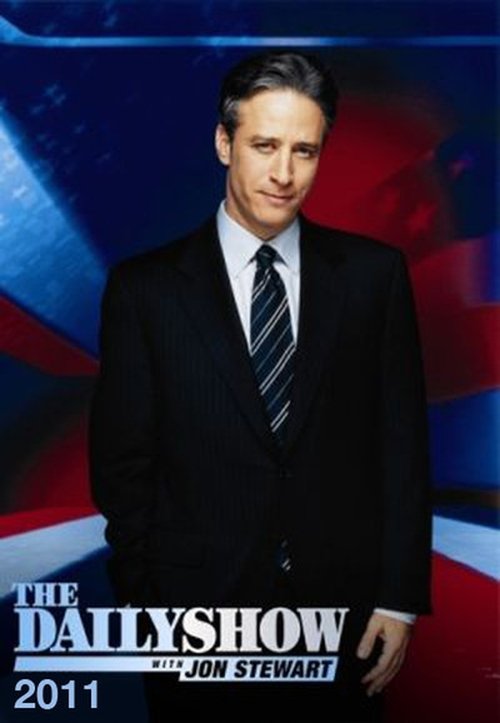
The Daily Show
Season 16 Analysis
Season Overview
No specific overview for this season.
Season Review
Categorical Breakdown
The narrative consistently frames the political discourse through a progressive lens, with conservative figures (often white males) portrayed as inherently wrong, foolish, or corrupt due to their ideology and position of power. While the show in 2011 was less focused on intersectional hierarchy than modern media, it strongly implies systemic problems and judges political actors based on their adherence to progressive social justice standards.
American political and financial institutions, particularly Congress, the media, and Wall Street (following events like the Occupy movement), are consistently framed as fundamentally dysfunctional, corrupt, and in need of radical overhaul. This institutional self-hatred critiques the present-day system intensely, though it does not often explicitly demonize the entire historical Western heritage or ancestors.
Gender dynamics are analyzed from a definitively progressive viewpoint. Female correspondents and guests are portrayed as competent intellectual authorities against bumbling or toxic male political figures. The satire consistently advocates for feminist political positions, with jokes often relying on the emasculation of male political targets as a form of comedic critique. However, it does not overtly push the 'Girl Boss' trope as a central character arc, focusing instead on political commentary.
The show takes a strong advocacy position for alternative sexualities, especially in the context of political issues like marriage equality and 'Don't Ask, Don't Tell' repeal, which were key issues in 2011. Opposing viewpoints are consistently framed as irrational, hateful, or bigoted, centering the discussion of sexuality as a critical social justice issue and working to deconstruct the legal and political supremacy of the traditional male-female pairing.
Traditional religion, particularly conservative or Christian-Right political movements, is consistently targeted and ridiculed. Segments frequently lampoon conservative Christian politicians and pundits, depicting them as hypocritical, intellectually bankrupt, or motivated by thinly veiled bigotry. The show frames traditional religion as a root of politically motivated social evil, effectively promoting a secular, transcendent moral law defined by liberal political consensus.