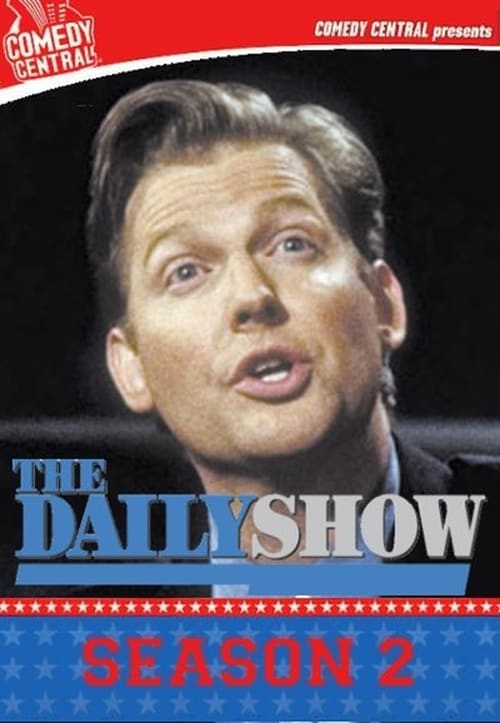
The Daily Show
Season 2 Analysis
Season Overview
No specific overview for this season.
Season Review
Categorical Breakdown
The narrative focus is on celebrity interviews and pop-culture events, not the vilification of any specific immutable characteristics or lecturing on systemic oppression. The casting is typical for a mid-90s late-night show, defined by a generally colorblind sensibility rather than a forced, intersectional hierarchy.
The content rarely addresses foundational American institutions or Western civilization as a core comedic target. The satire is aimed at the absurdity of media and celebrities, not a philosophical deconstruction of heritage or the notion that home culture is fundamentally corrupt.
The host's persona leans into a traditional, 'smug' masculine archetype, and the humor sometimes features mild objectification common to 90s comedy, but the show does not promote the modern 'Girl Boss' or 'Mary Sue' tropes. It also does not carry an explicit anti-natal or anti-family message; the score is slightly elevated only due to the era's generally non-complementary and male-centric comedic perspective.
The show is focused on conventional pop culture and news parody. It avoids centering on alternative sexualities, sexual ideology, or the deconstruction of the nuclear family through a 'queer theory' lens, as these concepts were not prevalent in mainstream 1997 late-night comedy.
As a general comedy show, the humor is not centered on an active hostility toward traditional religion, specifically Christianity. Morality tends to be subjective in a general comedic way, but there is no prolonged segment or narrative dedicated to framing faith as the root of evil or bigoted thinking.