The Daily Show
Season 3 Analysis
Season Overview
No specific overview for this season.
Season Review
Categorical Breakdown
The narrative focus of the Craig Kilborn-era show was satire of pop culture, celebrity, and the sensationalism of news media, not a critique of systemic oppression or an ideology based on race and intersectional hierarchy. The show lacked the modern political focus that would later drive a higher score in this category. The satire aimed at general media absurdity, which is a universal critique, not an identity-based one.
The show's targets were American media and celebrities, not Western civilization itself. There is no evidence of segments or running themes that framed the home culture as fundamentally corrupt or demonized ancestors; the satire was aimed at the superficiality of contemporary news and entertainment. The show maintains a nearly perfect 1/10 score because its critique does not extend to the 'deconstruction of heritage' or a belief in the 'Noble Savage' trope.
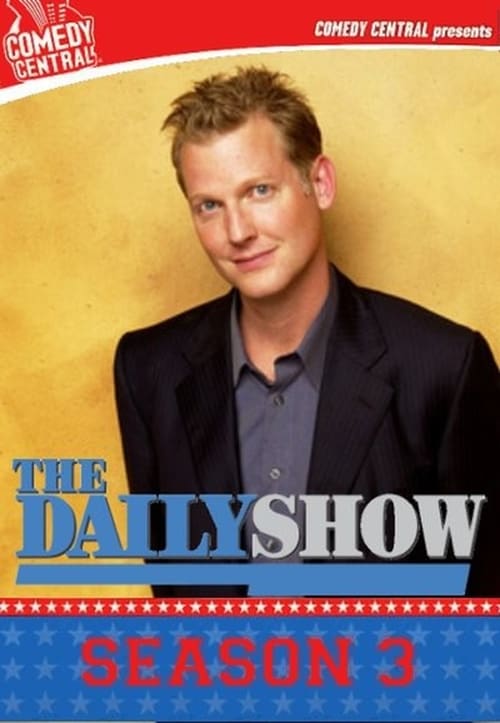
The host's persona, described as possessing 'frat-boy good looks and a self-parodying smirk,' leaned into an aggressively male-centric, late-90s comedy style. The show's humor was at times criticized as mean-spirited, but this is the opposite of the 'Girl Boss' trope and emasculation of males. The comedy was more likely to be non-PC by modern standards, reflecting a low score on the 'woke' scale, though not a 1/10 as the overall tone was not explicitly complementary or protective in the classical sense.
The core ideological concerns of 'Queer Theory' and aggressive gender deconstruction were not significant topics in mainstream political or cultural satire in 1998. The show's content revolved around the major news of the day, such as the Monica Lewinsky scandal, and general celebrity gossip. Sexual ideology was treated as a private matter or a source of tabloid comedy, not the central trait of a character or a vehicle for political lecturing, earning a very low score.
As a late-night comedy program, the show operates from a secular worldview typical of the medium. There was a segment called 'God Stuff' which mocked televangelists, a soft-target common in comedy that parodies hypocrisy rather than faith itself. Religion was not the primary, sustained target of the show's critique, which was reserved for media and politicians, indicating a low level of explicit anti-theism.