The Daily Show
Season 30 Analysis
Season Overview
No specific overview for this season.
Season Review
Categorical Breakdown
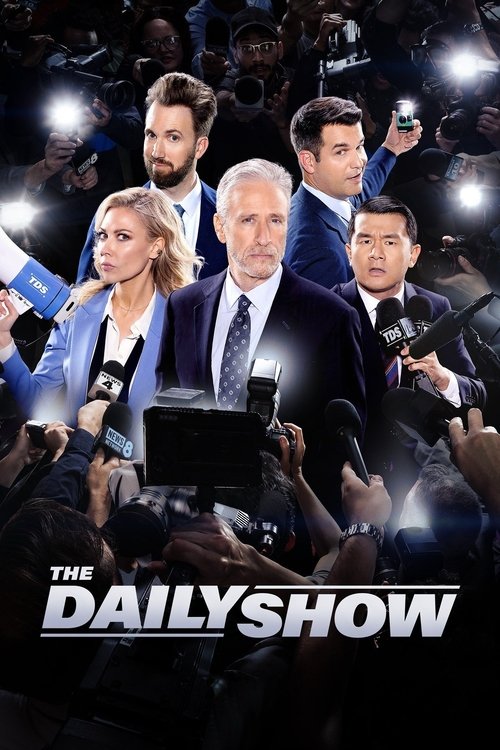
The narrative frequently employs an intersectional lens, defining characters and political figures by immutable characteristics and perceived group privilege. The diverse correspondent team, including Ronny Chieng, Desi Lydic, and Josh Johnson, often uses their own identities as a basis for commentary. The show's political focus overwhelmingly portrays conservative politicians (who are predominantly white males) as the source of societal incompetence and malicious intent, while framing progressive policy (like DEI in the military) positively.
The show dedicates significant time to critiquing American political institutions and foreign policy, particularly under Republican leadership, framing them as corrupt, hypocritical, or driven by ‘imperialist desires.’ Comparisons are made between the American political landscape and authoritarian dictatorships, presenting the home culture as fundamentally flawed and a source of global instability.
Desi Lydic is a strong, highly competent female anchor and correspondent, reflecting the 'Girl Boss' archetype within the show's format. However, one segment featured a nuanced discussion on men's issues and the phrase 'toxic masculinity,' which introduces a degree of complexity and prevents a maximum score. The overall framing remains feminist-progressive.
Alternative sexual and gender identities are centered and presented as normative, consistent with the show's progressive alignment. A non-binary writer and comedian (ALOK) was featured as a guest discussing the use of humor as resistance, explicitly elevating a queer-theory perspective. The show positions the promotion of LGBTQ+ rights and visibility as a key moral imperative against conservative bigotry.
The core focus of the show is political satire rather than religious commentary, which limits its explicit anti-theist content. However, as a liberal-secular program, it operates from a position of moral relativism derived from political power dynamics. The show does not portray faith or traditional religion as a source of objective truth or strength, and past targets have included televangelists, suggesting that traditional Christian influence is viewed with skepticism and ridicule.