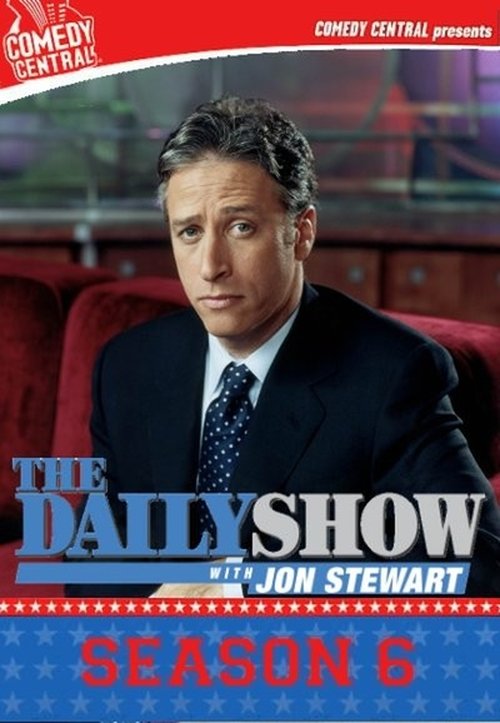
The Daily Show
Season 6 Analysis
Season Overview
No specific overview for this season.
Season Review
Categorical Breakdown
The narrative's primary focus is on criticizing political figures, media organizations, and institutional hypocrisy rather than relying on an intersectional hierarchy. White males are the frequent targets of satire, but they are mocked for political failure and incompetence in positions of power, not primarily for their 'whiteness' or immutable characteristics. Critiques align with political progressivism but stop short of an intersectional lecture.
The show is defined by its satirical, hyper-critical examination of American government and media institutions. The tone is highly cynical regarding the political system's effectiveness and honesty. The critique is directed at the current failures of the status quo, not at demonizing the nation's entire heritage or framing the home culture as fundamentally corrupt.
The program is news and political satire, which does not have a narrative plot to support 'Mary Sue' or 'Girl Boss' tropes. Political figures who are male are frequently mocked, but they are mocked for political failure and media absurdity. The content does not focus on anti-natalism, motherhood being a 'prison,' or systematic emasculation.
The core content of the political news and media satire from 2001 does not center alternative sexualities or deconstruct the nuclear family through a queer theory lens. Sexuality is treated as a secondary political or social issue when it appears in the news, not as the primary lens for the show's narrative.
The show's moral perspective is driven by secular political ethics and media criticism. Religious groups are criticized when they exert political influence or demonstrate hypocrisy in the political sphere. The program avoids affirming objective truth or higher moral law, instead utilizing a skeptical, relativistic satire, but it does not frame traditional religion as the root of all evil.