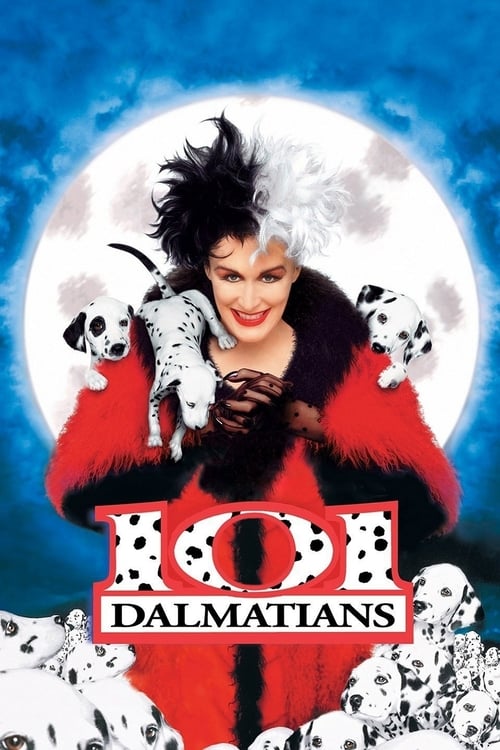
101 Dalmatians
Plot
An evil, high-fashion designer plots to steal Dalmatian puppies in order to make an extravagant fur coat, but instead creates an extravagant mess.
Get the Weekly Woke Watchlist
New and trending movies scored for woke bias, preachy messaging, and forced political themes — before you waste your evening.
No spam. One useful email per week.
Overall Series Review
Categorical Breakdown
Characters are judged entirely by their moral character; the protagonists are kind, protective people, and the villains are malicious animal abusers. The narrative does not employ an intersectional lens, nor does it rely on race or other immutable characteristics to justify character alignment or social commentary. Casting is colorblind without political lecturing.
The film reinforces the value of home, family, and community, with the entire plot centered on the protagonists protecting their domestic life in London and eventually moving to a larger country estate to accommodate their growing family. Institutions like the family are viewed as a protective shield against the chaos and malice embodied by the villain, which is the definition of Gratitude and Chesterton's Fence.
The female protagonist, Anita, is a successful fashion designer who marries and chooses motherhood, which is celebrated as a vital part of her life. Cruella de Vil, the female villain, is a caricature of the amoral, career-obsessed 'Girl Boss' type, framing her anti-family and hyper-materialist attitude as monstrous. The male lead, Roger, is an eccentric but good-hearted husband and father who works to defeat the evil plot. The gender dynamics are complementary, not antagonistic.
The core relationship is a traditional male-female pairing that culminates in a heterosexual marriage and the celebration of having a baby, reinforcing the normative family structure. There is no presence of alternative sexual ideologies, deconstruction of the nuclear family, or lecturing on gender theory. Sexuality remains a private aspect of the story, serving only to establish the central familial unit.
The film does not contain any hostility toward religion. The moral universe operates on a clear, objective good-versus-evil axis: Cruella is named 'De Vil' and seeks to murder innocent puppies, while the Dearlys embody virtuous protection and love. This reinforces the existence of a transcendent moral law where cruelty is objectively wrong and life is objectively valuable, without needing a direct religious message.
Get the Weekly Woke Watchlist
New and trending movies scored for woke bias, preachy messaging, and forced political themes — before you waste your evening.
No spam. One useful email per week.