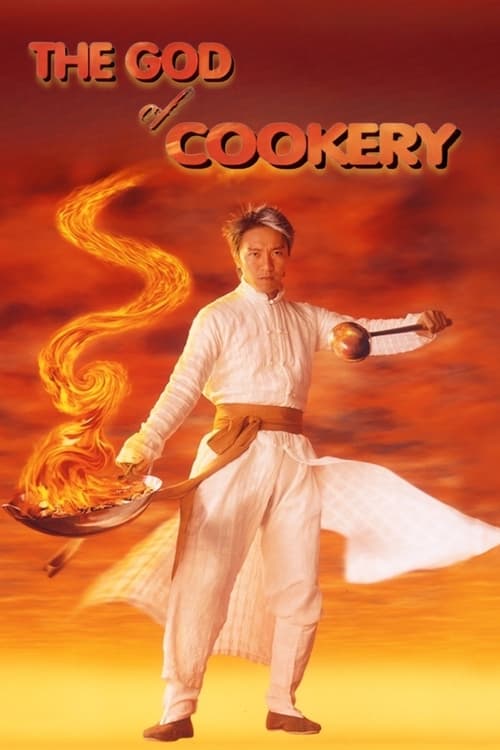
The God of Cookery
Plot
The most renowned and feared chef in the world loses his title of God of Cookery because of his pompous attitude. Humbled, he sets out to reclaim his title.
Get the Weekly Woke Watchlist
New and trending movies scored for woke bias, preachy messaging, and forced political themes — before you waste your evening.
No spam. One useful email per week.
Overall Series Review
Categorical Breakdown
The conflict is one of class and character merit versus corporate fraud and pretense. The initial protagonist is a rich, powerful fraud, and the hero's journey centers on his moral and professional growth. Characters are judged by the quality of their soul and their cooking skill, not by race or immutable characteristics. All main characters are Chinese, and there is no vilification of 'whiteness' or forced diversity.
The movie is an explicit celebration of authentic Chinese street food culture and martial arts. The corrupt elements are specific to the modern, celebrity-driven food business, not the civilization itself. The narrative uses traditional Chinese deities and folklore—the Kitchen God and Jade Emperor—to validate the protagonist's moral arc, reinforcing a respect for local cultural and spiritual heritage.
The female lead, Turkey, is highly competent, tough, and the moral compass who initially saves the bumbling male protagonist. This demonstrates a form of 'Girl Boss' competence, but the dynamic is not purely feminist. Her arc is intertwined with a traditional romantic motivation, enduring ridicule for her appearance out of devotion and ultimately being 'rewarded' with reconstructive surgery to become beautiful for the hero, which somewhat undercuts the pure 'Girl Boss' trope. The core message focuses on complementary love and competence, not anti-natalism or total emasculation.
The narrative centers on a traditional male-female romantic pairing and has a normative structure. There is no presence of alternative sexualities, gender ideology, or deconstruction of the nuclear family unit or traditional gender roles.
The climax of the film features the literal intervention of traditional Chinese deities (The Imperial Court of Heaven and the Kitchen God), who judge the characters' actions based on a transcendent, spiritual moral law. The protagonist's success is tied to finding a higher moral truth ('cooking with heart'). This is an affirmation of a moral order and spiritual reality, not a hostility toward religion.
Get the Weekly Woke Watchlist
New and trending movies scored for woke bias, preachy messaging, and forced political themes — before you waste your evening.
No spam. One useful email per week.