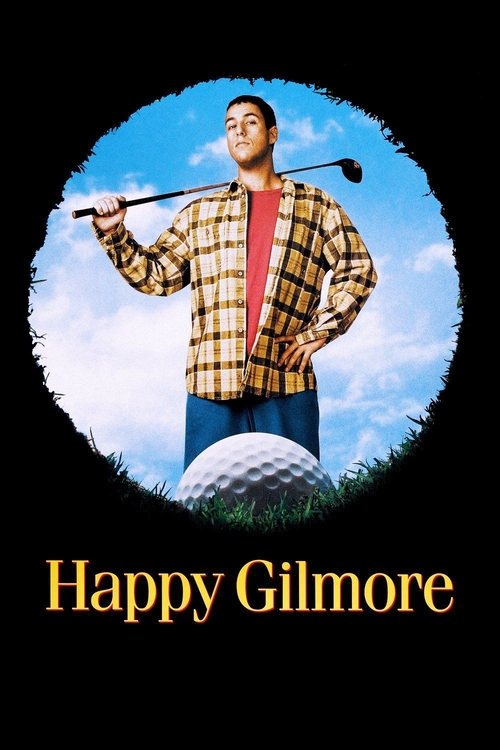
Happy Gilmore
Plot
Failed hockey player-turned-golf whiz Happy Gilmore — whose unconventional approach and antics on the green courts the ire of rival Shooter McGavin — is determined to win a PGA tournament so he can save his granny's house with the prize money. Meanwhile, an attractive tour publicist tries to soften Happy's image.
Get the Weekly Woke Watchlist
New and trending movies scored for woke bias, preachy messaging, and forced political themes — before you waste your evening.
No spam. One useful email per week.
Overall Series Review
Categorical Breakdown
The film centers on a conflict of class and behavior, not race or intersectional identity. The hero's main opponent is a wealthy white male, Shooter McGavin, who represents the corrupt elite. The mentor figure, Chubbs Peterson, is a Black former golf pro whose role is defined by his skill, wisdom, and merit, not his immutable characteristics. Character success or failure is determined by talent, self-control, and moral choice (saving the family home) rather than systemic privilege or immutable traits.
The central plot is an explicit defense of home and family legacy. Happy's entire motivation is to save his grandmother's house, which represents the foundation of his family. The narrative critique is directed at specific institutions—the golf tour's elitism and the IRS's bureaucracy—not Western civilization, its core institutions, or its ancestors as fundamentally corrupt or racist. The movie champions the traditional value of familial obligation.
The female lead, Virginia Venit, is a competent tour publicist, occupying a modern professional role. She serves a complementary function by guiding Happy to channel his aggressive masculinity into discipline, rather than acting as a flawless 'Girl Boss' who renders the male lead incompetent. The moral center of the film is the grandmother, whose home and safety are the sacred, pro-family objective. No anti-natalist or anti-motherhood themes are present; motherhood (or grandmotherhood) is celebrated as the primary protective motivation.
The movie contains no centering of alternative sexualities, gender ideology, or deconstruction of the nuclear family. The film's romantic pairing is strictly traditional, and sexuality is not a component of the main conflict or character definition. The narrative operates within a completely normative structure.
Religion is absent from the core conflict. The moral framework is objective, built on a simple good versus evil dynamic: Happy's heroic sacrifice for family versus Shooter McGavin's petty, self-serving villainy. Faith is not a source of conflict or a target of criticism. The story embraces an objective moral law where protecting family and behaving honorably is good, and cheating and greed are evil.
Get the Weekly Woke Watchlist
New and trending movies scored for woke bias, preachy messaging, and forced political themes — before you waste your evening.
No spam. One useful email per week.