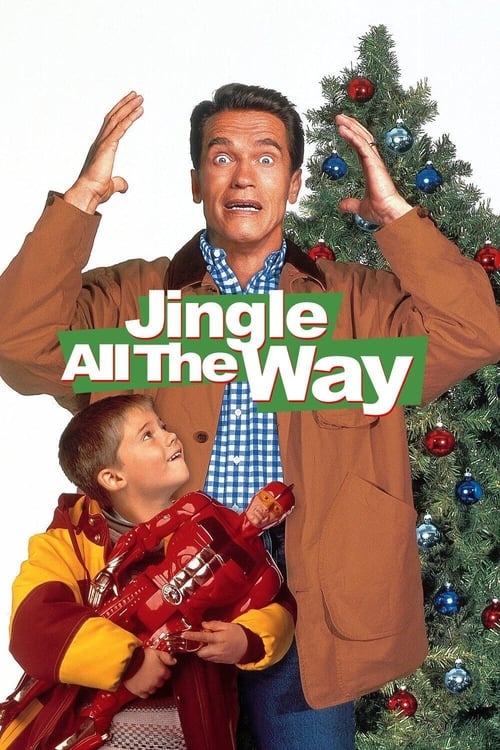
Jingle All the Way
Plot
Howard Langston, a salesman for a mattress company, is constantly kept busy at his job, disappointing his son. After he misses his son's karate exposition, Howard vows to make it up to him by buying an action figure of his son's favorite television hero for Christmas. Unfortunately for Howard, it is Christmas Eve, and every store is sold out of Turbo Man. Now, Howard must travel all over town and compete with everybody else to find a Turbo Man action figure.
Get the Weekly Woke Watchlist
New and trending movies scored for woke bias, preachy messaging, and forced political themes — before you waste your evening.
No spam. One useful email per week.
Overall Series Review
Categorical Breakdown
The narrative centers on a conflict between fathers defined by their competence and desperation, not race or class. Howard Langston, the wealthy White businessman protagonist, is deeply flawed (a liar and workaholic) while his main rival, Myron Larabee, the working-class Black postal worker, is portrayed as manic and a criminal antagonist, but with a relatable plight. The casting is genuinely colorblind, as the characters are judged by their actions and fatherly failures, following a universal meritocracy framework.
The film criticizes modern American Christmas consumerism and the greed it inspires, not Western civilization or the institution of the home itself. The entire plot is driven by the protagonist's desire to redeem himself and secure his family unit, which is upheld as the ultimate good. The suburban home, family, and Christmas traditions serve as the sanctuary Howard strives to return to, affirming these institutions rather than deconstructing them.
The female lead, Liz Langston, is the long-suffering, traditional mother and wife whose primary role is to protect the family from the father's neglect and the neighbor's sleazy attempts at seduction. The men—Howard, Myron, and the neighbor Ted—are all depicted as either bumbling, incompetent, or predatory, which is a mild form of male emasculation, but the overall message celebrates the nuclear family and protective masculinity (Howard's final act of redemption).
The movie operates entirely within a normative structure. The central conflict involves a traditional male-female pairing and their son. There is no presence of alternative sexualities, deconstruction of the nuclear family, or lecturing on gender theory for children.
The film’s backdrop is the overtly Christian holiday of Christmas, which it critiques for its commercialization, but this ultimately serves to affirm a non-materialistic, spiritual-moral lesson. The central theme of the movie is a return to Objective Truth: that time and family love are superior to material possessions. Faith itself is not a source of evil, and no Christian characters are presented as villains or bigots.
Get the Weekly Woke Watchlist
New and trending movies scored for woke bias, preachy messaging, and forced political themes — before you waste your evening.
No spam. One useful email per week.