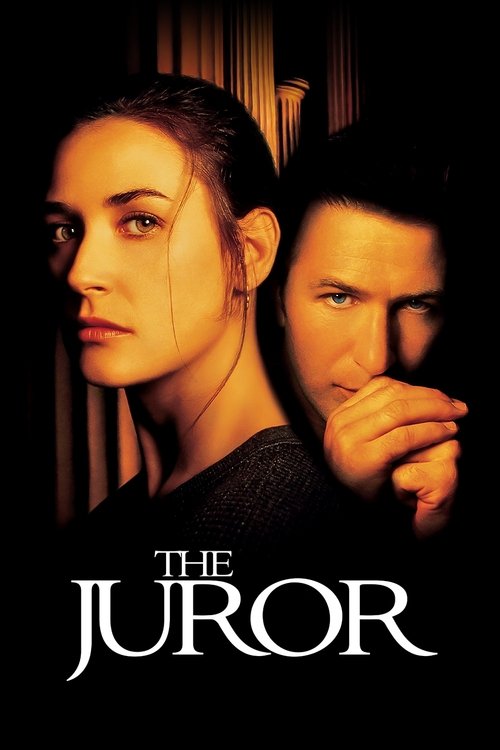
The Juror
Plot
With his gangster boss on trial for murder, a mob thug known as "the Teacher" tells Annie Laird she must talk her fellow jurors into a not-guilty verdict, implying that he'll kill her son Oliver if she fails. She manages to do this, but, when it becomes clear that the mobsters might want to silence her for good, she sends Oliver abroad and tries to gather evidence of the plot against her, setting up a final showdown.
Get the Weekly Woke Watchlist
New and trending movies scored for woke bias, preachy messaging, and forced political themes — before you waste your evening.
No spam. One useful email per week.
Overall Series Review
Categorical Breakdown
The plot is entirely focused on a personal criminal threat and juror intimidation, not a commentary on race or intersectional hierarchy. Character conflict is determined by a moral and criminal dynamic, not by immutable characteristics. All major characters, both villain and hero, are racially and culturally normative for a New York-based legal thriller about the Italian-American Mafia.
The film does not present a critique of Western civilization as fundamentally corrupt or racist. The primary antagonist is the Mafia, a clear criminal element, not a state institution or the nation itself. The villain, The Teacher, adopts a 'Zen' persona and quotes Lao Tzu, which slightly contrasts with the setting, but this is a personal quirk to show his pseudo-intellectual evil, not a narrative endorsement of civilizational self-hatred. The brief shift of the climax to Guatemala is for tactical plot reasons to hide the son, not a thematic promotion of the 'Noble Savage' trope.
The main character is a single mother, Annie Laird, who becomes a self-sufficient hero and 'powerful avenger' by the end, moving toward the 'Girl Boss' trope territory. However, her entire motivation is driven by her deep, celebrated maternal instinct to protect her son, which is an anti-Anti-Natalist theme. The villain is a manipulative man, but male characters are not universally incompetent or bumbling; they are the source of the primary threat. The plot elevates the woman's agency and strength from a maternal core, resulting in a moderate score.
The movie contains none of the elements of the Queer Theory lens. The main family unit, consisting of a mother and her son, is the one the audience is meant to sympathize with and protect. The narrative has no focus on alternative sexualities, gender identity issues, or deconstructing the nuclear family structure, which is a normative framework for the protagonist.
There is no direct attack or hostility toward Christianity or traditional religion. The villain, The Teacher, embraces and quotes Eastern philosophy (Taoist philosophy) as a part of his sophisticated, deceptive persona. This use of a non-Western spiritual text by the sociopathic villain prevents the score from being a minimum '1' but also does not represent an argument that 'Traditional religion is the root of evil.' The overall moral framework is clearly objective: the mob is evil, and stopping them is good.
Get the Weekly Woke Watchlist
New and trending movies scored for woke bias, preachy messaging, and forced political themes — before you waste your evening.
No spam. One useful email per week.