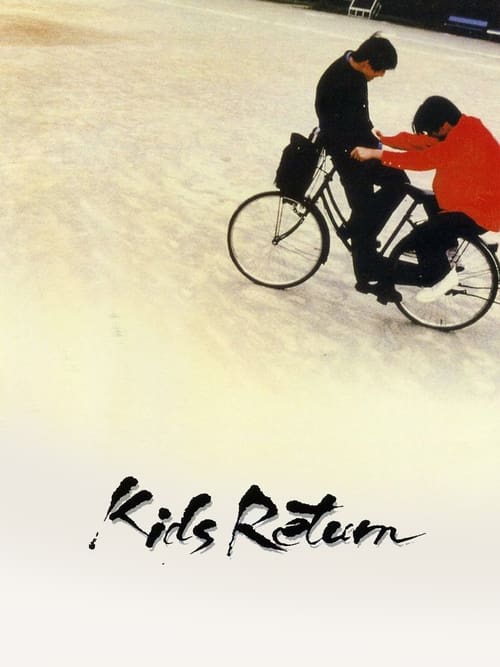
Kids Return
Plot
Shinji and Masaru spend most of their school days harassing fellow classmates and playing pranks. They drop out and Shinji becomes a small-time boxer, while Masaru joins up with a local yakuza gang. However, the world is a tough place.
Get the Weekly Woke Watchlist
New and trending movies scored for woke bias, preachy messaging, and forced political themes — before you waste your evening.
No spam. One useful email per week.
Overall Series Review
Categorical Breakdown
The film’s focus is on two Japanese male protagonists and their personal failures, not an intersectional lens. Characters are judged solely by their discipline, diligence, and choices, which constitute their merit. There is no representation of different races, nor is there any critique of 'whiteness' or forced diversity, as the setting is culturally authentic to a specific Tokyo suburb in the mid-1990s.
The film critiques the failures of modern Japanese institutions, such as the indifferent high school system and the overwork culture that leads to one character's death. This is an internal critique of contemporary societal pressures, not a broad demonization of Japanese heritage or ancestors. It is a bleak picture of growing up in the local environment, but does not depict a 'Noble Savage' or claim an external culture is spiritually superior.
The core of the narrative is male camaraderie and the experiences of young men. Female characters are extremely peripheral, existing primarily as romantic objects or background figures, and there is no emphasis on a 'Girl Boss' trope. The plot is driven by men choosing traditionally masculine paths (boxing and Yakuza). The story does not feature anti-natalism or frame motherhood as a prison.
The film’s central relationship is a traditional, non-sexual, deep male friendship, and the primary conflicts are heteronormative or career-focused. There is a complete absence of alternative sexualities being centered, the deconstruction of the nuclear family, or any commentary on gender ideology. Sexuality is treated as private and a non-issue in the public narrative.
Religion is absent from the narrative, making it neither a source of strength nor a target of critique. The moral framework is secular, emphasizing the objective truth that 'no short cuts to success' exist and that a lack of discipline leads to failure. Morality is not depicted as subjective or a matter of 'power dynamics,' but rather as a direct consequence of personal action and accountability.
Get the Weekly Woke Watchlist
New and trending movies scored for woke bias, preachy messaging, and forced political themes — before you waste your evening.
No spam. One useful email per week.