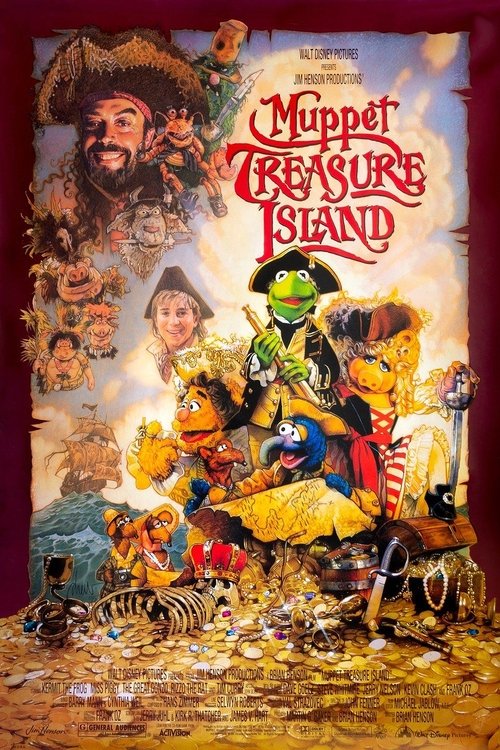
Muppet Treasure Island
Plot
After telling the story of Flint's last journey to young Jim Hawkins, Billy Bones has a heart attack and dies just as Jim and his friends are attacked by pirates. The gang escapes into the town where they hire out a boat and crew to find the hidden treasure, which was revealed by Bones before he died. On their voyage across the seas, they soon find out that not everyone on board can be trusted.
Get the Weekly Woke Watchlist
New and trending movies scored for woke bias, preachy messaging, and forced political themes — before you waste your evening.
No spam. One useful email per week.
Overall Series Review
Categorical Breakdown
Characters are judged by their actions, such as Long John Silver's greed versus Jim Hawkins's honesty, reflecting a universal meritocracy. The main hero is a white male orphan. The Muppets, being non-human, are cast in roles regardless of immutable characteristics. There is no plot focus on privilege or systemic oppression, though the narrative does contain a brief, minor depiction of non-Western islanders that leans into traditional, outdated stereotypes.
The movie is a celebration of a classic Western adventure story, set in 18th-century England and on the high seas. Institutions like the ship and the expedition team are portrayed as necessary structures against the chaos of piracy. There is no message that frames Western culture or its ancestors as fundamentally corrupt, only that greed is a universal human failing that creates villains.
The main female character, Miss Piggy as Benjamina Gunn, is a capable, assertive, and physically strong castaway, which is a gender-flipped version of a male character from the original novel. This provides a strong female presence. However, her competence is balanced by Muppet-style comedic flaws like ego and bossiness. Male characters like Jim Hawkins and Captain Smollett (Kermit) are fundamentally good and capable, preventing a theme of universal male emasculation. The movie is an adventure film, so anti-natalist messaging is absent.
The narrative adheres to a normative structure, focusing on a traditional adventure plot. The central romantic relationship, played for comedic tension, is the established male-female pairing of Kermit and Miss Piggy. There is no presence or discussion of alternative sexualities or gender ideology, and the nuclear family structure is not deconstructed, as the hero is an orphan seeking belonging.
The film is a secular adventure story. The moral framework is built on traditional objective concepts like honor, loyalty, and distinguishing between greed and virtue. There are no religious characters, messages, or scenes that portray religion, specifically Christianity, as a root of evil or source of bigotry. Morality is treated as a transcendent, objective law of conduct.
Get the Weekly Woke Watchlist
New and trending movies scored for woke bias, preachy messaging, and forced political themes — before you waste your evening.
No spam. One useful email per week.