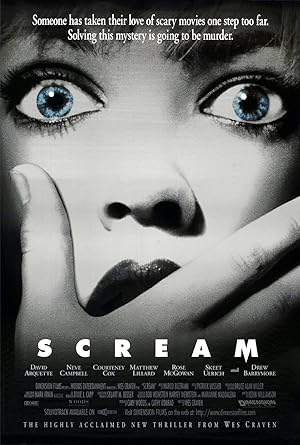
Scream
Plot
A year after her mother's death, Sidney Prescott (Neve Campbell) and her friends started experiencing some strange phone calls. They later learned the calls were coming from a crazed serial killer, in a white faced mask and a large black robe, looking for revenge. His phone calls usually consist of many questions, the main one being: What's your favorite scary movie? Along with much scary movie trivia, ending with bloody pieces of innocent lives scattered around the small town of Woodsboro.
Get the Weekly Woke Watchlist
New and trending movies scored for woke bias, preachy messaging, and forced political themes — before you waste your evening.
No spam. One useful email per week.
Overall Series Review
Categorical Breakdown
The plot's central conflict is driven by personal vengeance and a misogynistic rage aimed at female sexuality, not race or intersectional hierarchy. The main cast is largely white, and the story does not include forced diversity. The killers, Billy and Stu, are presented as archetypes of toxic masculinity, a framing that targets a specific form of white American male identity.
The film's setting is the small American town of Woodsboro, and the conflict arises from an internal breakdown—a personal, generational feud originating in infidelity. The film's meta-commentary critiques media sensationalism and teen immaturity, not Western civilization or ancestral institutions as fundamentally corrupt or racist.
The core of the conflict features two male characters who become serial killers motivated by 'rage aimed at female sexuality' and a desire to punish women they perceive as sluts or whores. The narrative inverts the traditional slasher formula by having female characters Sidney Prescott and Gale Weathers defeat the male perpetrators, who are explicitly presented as embodying 'violent and toxic white American masculinity.' Sidney is portrayed as resilient and rejects the label of 'victim,' choosing instead self-empowerment. Dewey, the positive male character, is presented as an 'inclusive masculinity' counterpoint, noted for his emotional intimacy and rejection of 'gunslinging white knight' heroics.
The story's focus on sexuality is exclusively related to heterosexual teen relationships, virginity, and the slasher trope of punishing promiscuity. The traditional male-female pairing is the normative structure of the movie. There is no overt centering of alternative sexualities or political lecturing on gender theory within the narrative itself.
Religion is not a factor in the story's events or the characters' moral compasses. The characters operate in a secular environment where morality is discussed in the context of pop culture's influence on real-world violence. The lack of transcendent morality is suggested by the killer's initial claim that having 'no motive' is scarier, embracing nihilism, though the final motive is personal vengeance.
Get the Weekly Woke Watchlist
New and trending movies scored for woke bias, preachy messaging, and forced political themes — before you waste your evening.
No spam. One useful email per week.