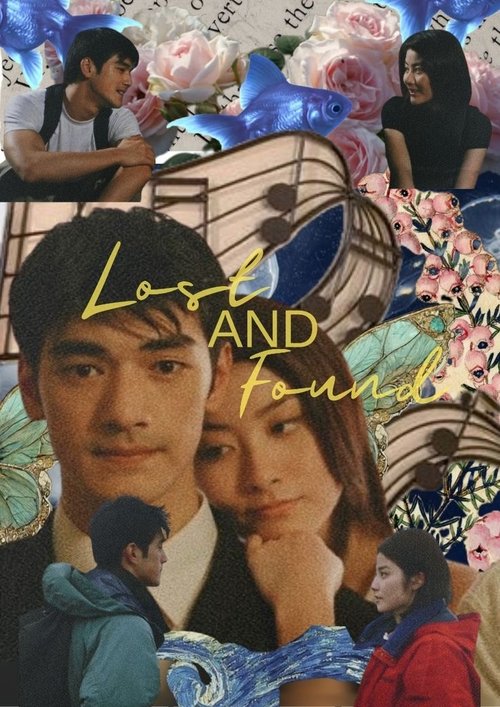
Lost and Found
Plot
A woman diagnosed with leukemia meets a Chinese-Scottish sailor who she loses contact with. In order to find him she enlists Worm, a man who runs a “lost and found” business, and the two set out to find what she’s looking for.
Get the Weekly Woke Watchlist
New and trending movies scored for woke bias, preachy messaging, and forced political themes — before you waste your evening.
No spam. One useful email per week.
Overall Series Review
Categorical Breakdown
The narrative revolves around an emotional search for a lost love and personal identity in the face of death, not political hierarchy or systemic oppression. Characters are defined by their unique personalities and emotional needs, following the theme of universal meritocracy. The presence of characters with diverse backgrounds (Chinese, Mongolian descent, Scottish-Chinese sailor) is organic to the Hong Kong setting and the romantic plot device, not a forced political statement.
The film contrasts the 'cluttered chaos' of the Hong Kong setting with the 'mythic landscape' of the Scottish highlands, which represents the romanticized object of the search and a sense of 'elsewhere.' This East-on-East/West comparison critiques a lifestyle (urban chaos) and romanticizes a distant one (nature), but as a Hong Kong film, it does not constitute hostility toward Western civilization, its own home, or its ancestors.
The female lead is the primary driver of the plot, deciding to abandon treatment to seek meaning and a lost love. Her journey is about finding hope and a sense of self through personal initiative. She is not an instantly perfect 'Girl Boss' but a character on a path of growth. Men are portrayed sympathetically, either as the charismatic object of her search or the kind-hearted, engaging friend. The narrative centers on a romantic and existential search, not the denigration of traditional gender roles or anti-family messaging.
The narrative focuses exclusively on the emotional and romantic bonds between the main female character and two male characters. The core structure is normative, featuring a traditional male-female pairing as the object of the search. The film contains no elements of sexual ideology, gender theory, or deconstruction of the nuclear family.
The central theme is a search for meaning, hope, and coming to terms with death, leading to an 'idealistically inspirational' and 'transcendent' conclusion. The movie’s focus on universal human values and finding a purpose in life aligns with a belief in objective truth and a higher moral framework, not moral relativism or hostility toward faith. The antagonist is a fatal disease, not religion.
Get the Weekly Woke Watchlist
New and trending movies scored for woke bias, preachy messaging, and forced political themes — before you waste your evening.
No spam. One useful email per week.