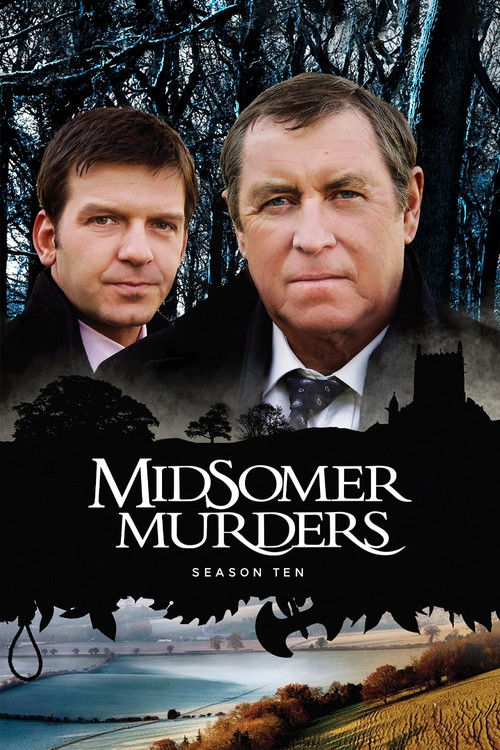
Midsomer Murders
Season 10 Analysis
Season Overview
No specific overview for this season.
Season Review
Categorical Breakdown
The season contains no evidence of 'race-swapping' or forced diversity. The setting and cast reflect the show's stated production goal of portraying the rural English village as a 'bastion of Englishness,' focusing on a predominantly homogeneous population. Characters are vilified for their personal corruption, greed, and immorality, not their 'whiteness' or position in an intersectional hierarchy.
The central premise is a nostalgic one, valuing the aesthetic of the English rural idyll and traditional institutions like the nuclear family, which serves as a moral anchor for DCI Barnaby against the chaos of Midsomer. While episodes consistently expose the decadence, secrecy, and corruption of the gentry and rural elites, this is a critique of *personal* hypocrisy and class-based vice, not an indictment of Western civilization itself or its ancestors. An episode dealing with the closure of a crystal factory addresses the decline of British industry but frames it as a tragic consequence of business corruption and foreign manufacturing, not a welcomed societal deconstruction.
Female characters are not presented as 'Mary Sues' or 'Girl Boss' figures. They are complex individuals who are just as capable of being victims or murderers as men, driven by traditional motives such as greed, lust, or a desire for freedom from controlling husbands or partners. The narrative follows DCI Barnaby, a stable, married, family man whose daughter, Cully, appears in the season and is soon to be married. The series avoids anti-natalist or anti-family messaging, treating the nuclear family as a stable contrast to the village scandals.
Alternative sexualities are present only as a source of private scandal, blackmail, or a motive for murder, rather than being centered for positive representation or public celebration. The show treats these elements as a dark undercurrent of human behavior hidden beneath a respectable façade, consistent with the tone of a dark mystery series. The narrative does not feature any elements of gender ideology or explicit lecturing on sexual identity.
The score is elevated slightly because the show frequently uses churches, vicars, and religious or esoteric groups (such as Freemasons, spiritualists, or sects) as the settings or source of hypocrisy, mystery, and eventual murder. However, this is a procedural trope to show that evil lurks even in 'holy' places, not an overt ideological attack on the merits of faith itself. Morality remains objective, as the main detective's job is to enforce a transcendent moral law (murder is wrong) and restore order.