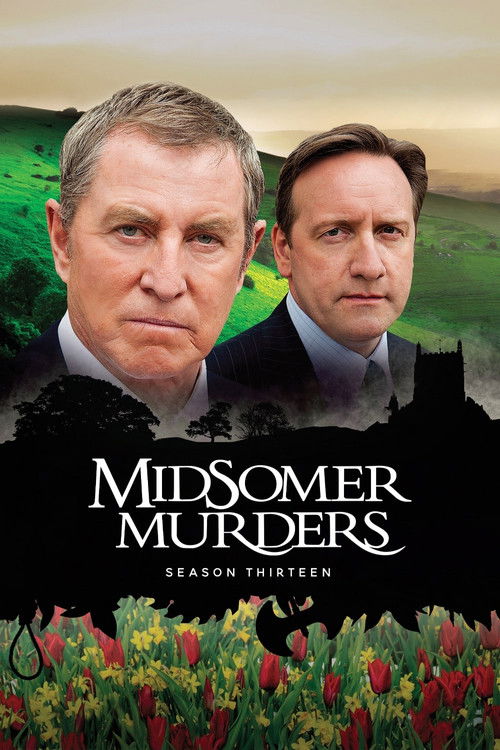
Midsomer Murders
Season 13 Analysis
Season Overview
No specific overview for this season.
Season Review
Categorical Breakdown
The characters are judged entirely by their actions and their moral caliber, which is a universal meritocratic principle. Casting reflects the setting of a traditional English county, featuring no forced diversity or 'race-swapping.' The narrative avoids intersectional analysis and does not vilify the majority white male characters based on their identity; the male characters who are villains are so due to classic motives like greed, incest, or property fraud.
The season's setting is the fictional, aesthetically preserved county of Midsomer, which is lovingly depicted despite the high murder rate. While the villages are exposed as dens of personal corruption, this is a feature of the mystery genre, not an ideological attack on Western civilization. Institutions like the church, family, and local gentry are shown as flawed due to the individuals within them, not as fundamentally racist or corrupt entities.
DCI Tom Barnaby's wife, Joyce, and other female characters operate within a normative structure, providing insight and support without demanding to be the center of professional authority. Female characters are diverse in their roles, including victims, murderers, and helpers, motivated by common narrative drivers like jealousy or protection of family. The show's gender dynamics are complementary, with Barnaby's core competence remaining firmly established, preventing a 'Girl Boss' dynamic.
Alternative sexualities or gender ideology are not themes addressed by the narrative. Sexual relationships, when they appear, are primarily traditional, focusing on adultery or illicit affairs as a source of conflict. The nuclear family structure of the main character, DCI Tom Barnaby, is presented as the functional, private norm, with no attempts to deconstruct or lecture on gender theory.
Religious characters, such as the vicar in 'The Made-to-Measure Murders,' are key parts of the community and are sometimes victims of crime. The show uses the church setting as a backdrop for secrets and traditional morality plays. The narrative's focus is on personal failings and earthly vices; faith is not explicitly maligned as the root of evil, nor is moral relativism promoted over transcendent moral law.