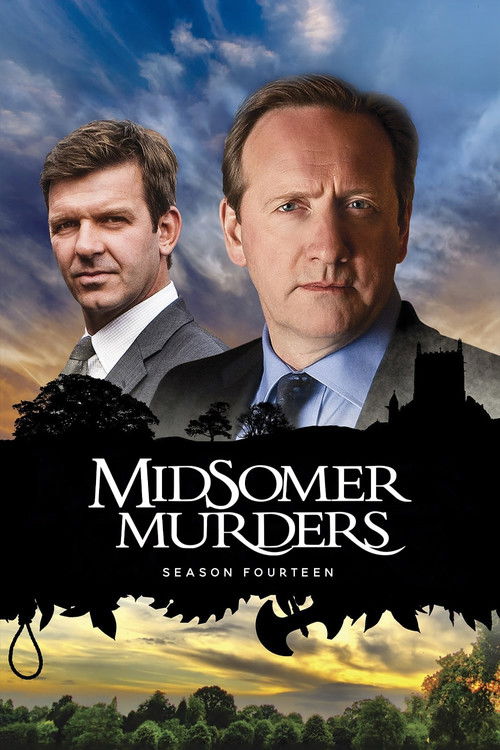
Midsomer Murders
Season 14 Analysis
Season Overview
No specific overview for this season.
Season Review
Categorical Breakdown
Characters are judged by their actions and secrets related to greed, lust, and rivalry, not by their race or immutable characteristics. Casting remains historically authentic to the setting of an English country village with little forced diversity. Meritocracy is universal in the detective's pursuit of truth.
The series constantly deconstructs the facade of the ‘quaint village,’ which is a foundational trope of the British murder mystery genre, showing the deep corruption beneath the surface of English heritage and institutions (boarding schools, estates, historical groups). This critique targets the hypocrisy of the wealthy and traditional, but it does not frame the home culture as fundamentally evil or racist on an ideological level.
DCI Barnaby's wife, Sarah, is a professional teacher, contrasting with the previous DCI's wife. The new pathologist, Kate Wilding, is introduced as a highly competent, unflappable professional. Female characters are often strong-willed, ruthless, or manipulative criminals, fulfilling the series' convention of presenting capable women without resorting to a simplistic 'Mary Sue' trope. The plot avoids anti-natalist or gender-as-oppression messaging.
A single plot point in an episode contains a coded reference to a potential alternative lifestyle group being one of the hidden eccentric secrets of the village. This is presented as an oddity in the Midsomer tradition, not as a central focus or a vehicle for lecturing on sexual ideology. The narrative adheres to the traditional nuclear family as the normative structure.
One episode is set in a cloistered nunnery where the plot uncovers crime, hypocrisy, and greed within the religious institution. This is a critique of the *people* using the institution, a common feature in mysteries, but it avoids direct attacks on the principles of Christian faith itself, stopping short of claiming religion is the root of all evil.