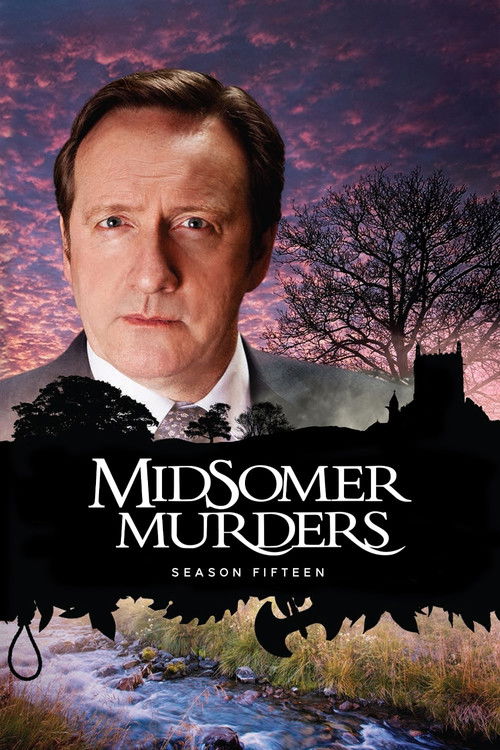
Midsomer Murders
Season 15 Analysis
Season Overview
No specific overview for this season.
Season Review
Categorical Breakdown
Characters are judged entirely by their actions, dark secrets, and traditional motives such as money, jealousy, and revenge. The core mysteries do not feature race, sexual identity, or intersectional hierarchy as primary plot drivers or thematic commentary. Casting remains largely homogenous, reflecting the setting of a traditional English village, without forced diversity or narrative focus on immutable characteristics.
The series' fundamental premise is the consistent, brutal exposure of murder, corruption, and dark secrets beneath the veneer of English village tradition and heritage. Every institution featured, from aristocratic families staging Civil War re-enactments to prestigious prep schools and local businesses, is revealed to be rotten with moral decay. This creates a deconstruction of home culture and heritage, though the critique is directed at individual corruption rather than systemic political failure.
Gender dynamics are traditional, focusing on infidelity, old-fashioned power imbalances in marriage, and career ambition versus domestic life. Female characters are central to the crimes, often as victims, perpetrators, or adulterers. There is no evidence of the 'Girl Boss' or 'Mary Sue' trope; female characters are as flawed and morally complex as the male characters. The narrative features women whose careers are separate from their husbands' businesses and female characters who are manipulative or victims of male deception, but avoids explicit anti-natal or feminist messaging.
The plots center on normative relationships, with crimes motivated by classic male-female adultery and traditional family drama. There is no introduction of queer theory, gender ideology, or centering of alternative sexualities. The topic of sexuality is addressed as private immorality (affairs) rather than a public political or ideological statement.
Religion is not a significant factor or narrative focus. The characters and crimes are driven by secular motives (money, sex, rivalry, revenge). There is no plotline that actively demonizes Christian characters or portrays traditional faith as the root of evil. The morality displayed is generally transcendent, with the police operating under a clear understanding of objective justice (murder is wrong) rather than subjective 'power dynamics.'