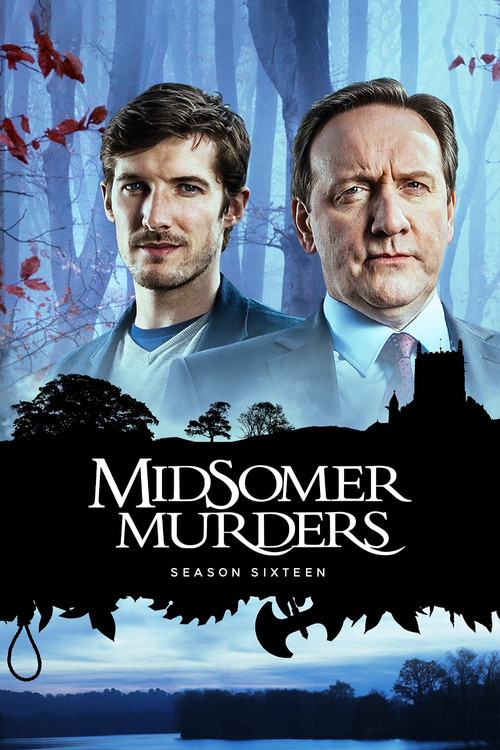
Midsomer Murders
Season 16 Analysis
Season Overview
No specific overview for this season.
Season Review
Categorical Breakdown
The main cast and the vast majority of recurring and guest characters are white and English, reflecting the setting of a traditional English county. Characters are judged solely on their merit, their connection to the crime, and their moral failings. There is no lecturing on 'whiteness,' 'privilege,' or an intersectional hierarchy. The cast is genuinely colorblind without political insertion.
The score is slightly elevated because the entire premise of the series, including this season, is the satirical deconstruction of the idyllic English village, revealing it to be a hotbed of murder, adultery, and social dysfunction. However, this is a standard mystery trope of the past 100 years, not a modern vilification of Western civilization. The narratives respect the historical elements, such as a World War Two flying mission in 'The Flying Club,' without overtly demonizing the national heritage.
DCI Barnaby’s wife, Sarah, has a professional career as a headmistress and celebrates motherhood with the birth of their daughter, Betty, balancing both without framing one as a 'prison.' Pathologist Dr. Kate Wilding is a coolly competent professional who performs her job without the 'Girl Boss' tropes of being instantly perfect or overtly emasculating her male colleagues. One episode features two capable female Danish police detectives, but they are professional partners, not 'Mary Sues.'
The plots focus on traditional motives like lust, jealousy, and financial malfeasance. Sexual identity is treated as a private matter and does not become the main subject of the narrative. The traditional nuclear family structure, with DCI Barnaby and his wife, is centered by the introduction of their newborn baby, serving as a normative anchor for the show.
One episode, 'Let Us Prey,' uses a medieval fresco and a killer punishing 'sinners' as its theme. While this involves a dark portrayal of a religious setting, the episode's conclusion is a typical *Midsomer* scenario where a human perpetrator with a corrupt personal motive is revealed, not a condemnation of faith itself. The show uses the Church and its institutions as a scenic backdrop for secrets rather than as the root of evil.