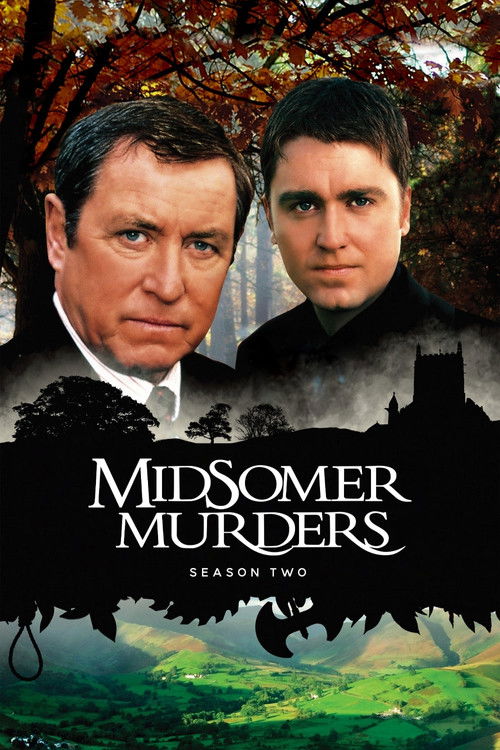
Midsomer Murders
Season 2 Analysis
Season Overview
No specific overview for this season.
Season Review
Categorical Breakdown
The season contains no discernible identity politics, intersectional hierarchy, or vilification of 'whiteness.' The casting is overwhelmingly white, consistent with the original producer's explicit intent to portray a homogenous, traditional English setting. Non-white characters are rare and are not given prominent roles to lecture on privilege or systemic oppression.
The narrative does not exhibit outright 'civilizational self-hatred,' but operates as an internal critique, revealing the foundational corruption, adultery, and murder within the traditional English institutions and gentry. The murder and hypocrisy always stem from the white, rich, established villagers. This deconstructs the English pastoral ideal, portraying the village as a rotten core beneath a picturesque surface, but the protagonist DCI Barnaby represents a functioning, morally grounded aspect of the culture attempting to restore order.
The season does not feature 'Girl Boss' tropes; female characters are complex and are sometimes the primary murderer, driven by traditional motivations like revenge, jealousy, or protecting a secret. DCI Barnaby's wife and daughter are depicted in traditional supportive family roles. Gender dynamics are based on individual character flaws and secrets, not on a critique of masculinity or a promotion of anti-natalist ideology.
The season's primary focus is on heterosexual secrets, adultery, and domestic crime. Openly gay or lesbian characters appear rarely, as dictated by the plot's focus on secrecy and motive. There is no presentation or centering of alternative sexualities as an ideological point, nor is there any presence of modern gender theory discourse or the deconstruction of the nuclear family as a political goal.
The show presents a world permeated by a spiritual vacuum and moral relativism, where traditional faith offers little solace. While a vicar is a suspect or peripheral figure in a plot, and the Church of England is often presented as a collection of hypocrites, the overall worldview is that 'God does not exist' and life is 'hopeless,' which fulfills the definition of a spiritual vacuum and secular moral foundation rather than an explicit attack on Christianity or faith as an institution.