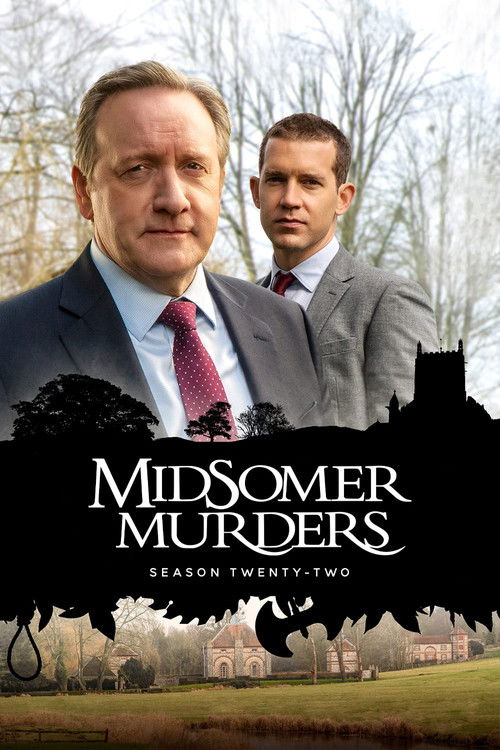
Midsomer Murders
Season 22 Analysis
Season Overview
The peacefulness of the Midsomer community is shattered by violent crimes, suspects are placed under suspicion, and it is up to a veteran DCI and his young sergeant to calmly and diligently eliminate the innocent and ruthlessly pursue the guilty.
Season Review
Categorical Breakdown
Casting has continued the trend of incorporating more actors from minority ethnic groups into guest and supporting roles, an intentional effort by the production team following historical controversy. The plots, however, do not appear to center on race, immutable characteristics, or intersectional hierarchy; characters' motivations remain tied to conventional tropes like greed, revenge, and secrets. Diversity is present on screen but does not dominate the narrative or lead to overt political lecturing.
The series maintains its core deconstructive trope of the idyllic English village being a hotbed of malice and secret corruption. Every traditional setting—from a psychic fayre to a village scarecrow festival or an amateur operatic society—is shown as a cover for murder. This inherently criticizes the romanticized view of English heritage and institutions. However, the motivation for villainy is almost always personal, not framed as a systemic failure of Western civilization or as a lecture on civilizational self-hatred.
The core detective partnership remains DCI Barnaby and DS Winter, reinforcing a male-led structure. The character of the female pathologist, Dr. Fleur Perkins, is strong, highly competent, and independent. The male protagonist, Barnaby, is a stable husband and father. There is no evidence of widespread emasculation of males as a class or explicit anti-natalist messaging. A single scene in one episode features a brief, lighthearted gender role reversal where male physique is objectified, but this is a momentary occurrence, not a narrative theme.
Alternative sexualities are not centered in the season's major plot lines, and there are no evident elements of 'queer theory' lecturing or the active deconstruction of the nuclear family unit. The show maintains a normative structure, where sexuality, if present in the narrative, is treated as a private characteristic or part of a conventional motive for murder/drama, rather than an ideological centerpiece.
One episode focuses on a vicar who is murdered in his church, with the motive being personal revenge over lottery winnings and hidden secrets, not an attack on Christian faith itself. The show uses the church and its clergy as traditional village institutions and characters, who, like all residents of Midsomer, are susceptible to moral failure. Another episode featuring a Psychic Fayre critiques pseudoscience rather than traditional religion, which is in line with the show's long-standing use of eccentric village groups as plot devices.