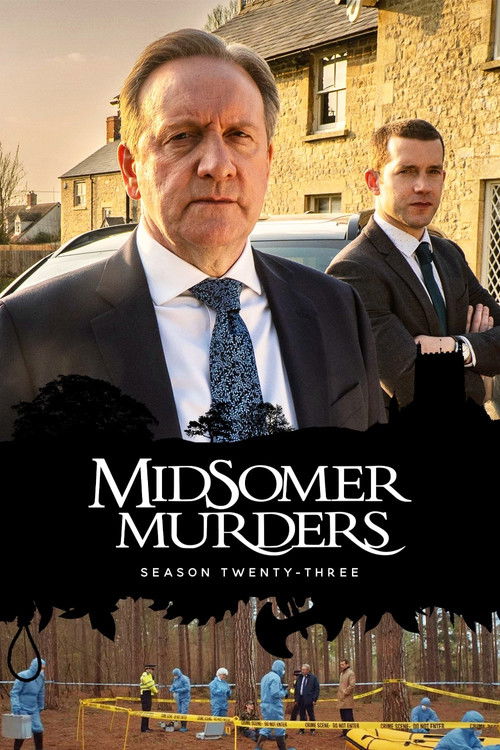
Midsomer Murders
Season 23 Analysis
Season Overview
The peacefulness of the Midsomer community is shattered by violent crimes, suspects are placed under suspicion, and it is up to a veteran DCI and his young sergeant to calmly and diligently eliminate the innocent and ruthlessly pursue the guilty.
Season Review
Categorical Breakdown
The casting in guest roles is noticeably diverse, featuring non-white actors in principal positions across the episodes. This is a clear move away from the show’s traditional, ethnically homogenous village environment. The core narrative, however, does not overtly lecture on privilege or systemic oppression, and character value is still fundamentally tied to their involvement in the murder mystery, not their immutable characteristics.
The series remains deeply rooted in the aesthetic of the traditional English village, utilizing this cultural heritage as its setting. While the crimes often expose the greed and corruption inherent in these communities—a long-running trope of the show—the setting itself is never framed as fundamentally racist or corrupt due to its Western nature. The narrative explores conflicts between tradition and modernity (e.g., old businesses vs. an organic bakery), but this serves the murder plot rather than civilizational self-hatred.
The character of Dr. Fleur Perkins, the competent and authoritative female pathologist, continues her role as a professional woman in a high-authority position, which is a modern 'Girl Boss' element. DCI Barnaby and DS Winter are still depicted as capable male leads; there is no pervasive theme of male emasculation or bumbling incompetence. The traditional family unit of the DCI is still portrayed as a stable background element.
One episode, 'Dressed to Kill,' makes sexual ideology a central conflict, pitting a traditional domino tournament against a charity drag queen event. This centers an alternative sexuality as a key narrative device, creating the 'friction' that leads to the murder and moving the story far beyond a normative or private portrayal of sexuality.
There is no significant focus on religion. Plot lines center on secular eccentricities, such as doomsday preppers, police retirement homes, and artisan bakeries. No explicit or pervasive hostility toward faith, particularly Christianity, is detected, and moral law is generally upheld by the police protagonists in the pursuit of justice.