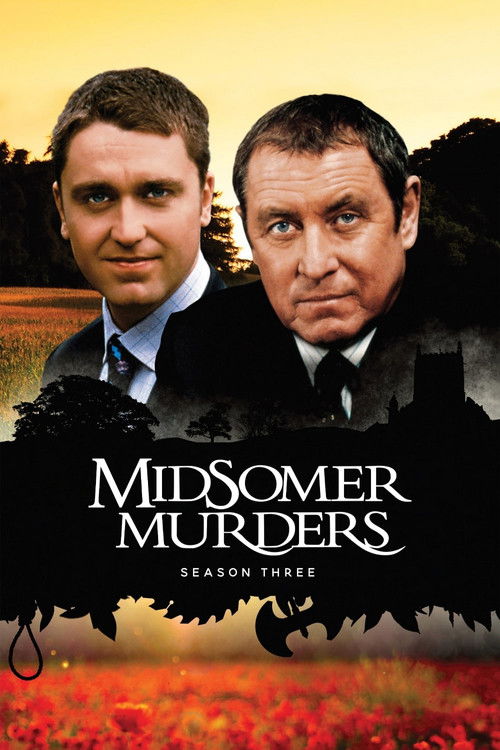
Midsomer Murders
Season 3 Analysis
Season Overview
No specific overview for this season.
Season Review
Categorical Breakdown
The narrative operates in an almost exclusively white, English, middle-to-upper-class environment, focusing entirely on conflicts of money, class, and secrets, completely bypassing race- or identity-based grievances. The show exhibits a purely colorblind approach, not featuring forced diversity or narratives centered on intersectional hierarchy. The focus remains on individual character merit or, more often, individual moral failure.
The series' entire premise is the deconstruction of the 'quaint' English village facade, consistently showing that behind the picturesque cottages and community activities is a world rife with adultery, blackmail, and murder. This depicts home culture as fundamentally rotten and corrupt. However, the critique is focused on individual human vice and hypocrisy, not a wholesale condemnation of Western civilization or heritage as evil; institutions like family and the justice system (DCI Barnaby) remain the anchors of order, preventing a 10/10 score.
DCI Tom Barnaby is the central, competent male figure, and his deputy, DS Troy, is also male. Female characters are frequently the murderers, which prevents the establishment of a 'perfect female lead' or 'Mary Sue' trope. The depiction of Barnaby's wife, Joyce, is as a supportive, domestic, slightly eccentric woman, which is complementary but not a 'girl boss.' The narrative does not promote anti-natalism; instead, it frequently critiques adultery and broken family structures.
Alternative sexualities are virtually absent from the narrative as a central, celebrated, or politically charged theme. The show's core structure revolves around DCI Barnaby's stable, traditional male-female marriage and family. Sexual intrigue, when it occurs as a murder motive, almost always revolves around clandestine heterosexual affairs, aligning with a strictly normative structure where sexuality is private and not an ideological focus.
Religious individuals and groups often appear in the villages as eccentric, highly-strung, or hypocritical. The show uses the setting of the church or religious community to house secrets and crime, following a classic British mystery trope of exposing the rot within respectable society. While Christianity itself is not directly 'vilified' in a didactic way, its practitioners are routinely depicted as deeply flawed or criminals, lending itself to a moral relativist framework where human action supersedes objective moral law, but it stops short of an outright anti-theistic lecture.