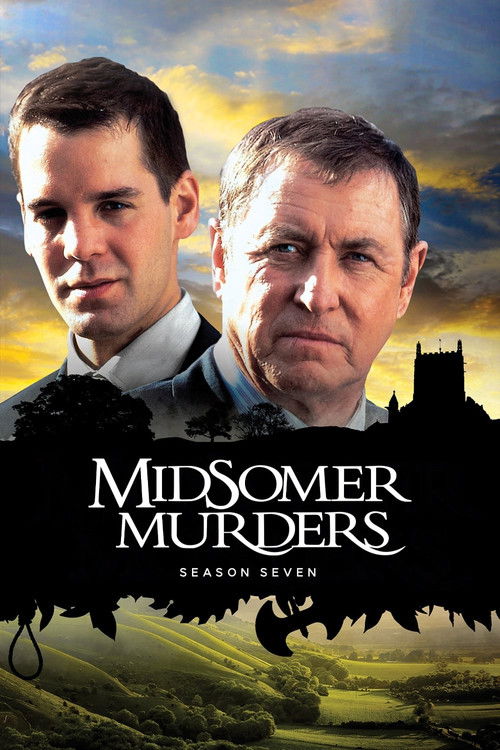
Midsomer Murders
Season 7 Analysis
Season Overview
No specific overview for this season.
Season Review
Categorical Breakdown
The casting remains overwhelmingly white, consistent with the specific cultural setting of the fictional Midsomer County, suggesting a focus on historical authenticity over forced diversity. The drama does not rely on race or immutable characteristics to determine moral standing or plot direction. The main conflict is typically between classes, like locals versus new money or gentry versus commoners, and the motives are classic vice-driven crimes, not lectures on systemic oppression.
The show does not exhibit pure civilizational self-hatred, but it consistently presents the institutions and heritage of the English countryside—specifically the gentry and aristocracy—as fundamentally corrupt, decadent, and a source of crime and deceit. The narrative pits the moral 'thrift' of the common man against the 'decadence' of the manor house elite. This serves as a critique of class and heritage, positioning it above a 1/10, but the critique remains focused on specific human failings within the system, not a call for the system's destruction.
Female characters are not all 'perfect' or 'Mary Sues'; they are portrayed with the same moral complexity and potential for evil as the men. One episode features a strong, deceptive female character who is much more dangerous than she appears, and another shows Barnaby's daughter successfully engaging in amateur detective work. The protagonist, DCI Barnaby, is a competent, protective male figure, and his marriage to Joyce is portrayed as a stable, loving foundation. The drama avoids overt anti-natalist or 'men are toxic' messaging, showing a mix of competent and villainous male characters.
The presence of explicit homosexual characters, including a victim/lover pairing in a literary circle plot and a Reverend with a male lover in a separate episode, raises the score above a 1. However, their sexual orientation is not the center of the narrative, nor is it a source of political virtue or oppression. It is simply a fact of their complex, hidden lives that contributes to the setting's tapestry of secrets, in line with the numerous secret heterosexual affairs and hidden families.
One episode features a clergyman being burned alive in a straw effigy, and his gay lover, also a Reverend, dies later. A pig's head is left on the church altar as an act of desecration. These events use religion as a backdrop for scandal and murder, but the ultimate explanation for the crimes is a rational, human motive (such as revenge or financial gain), not a spiritual vacuum. The detective is not anti-faith, simply anti-superstition, remaining focused on objective moral law (murder is wrong) but not endorsing or demonizing the Christian institution itself.