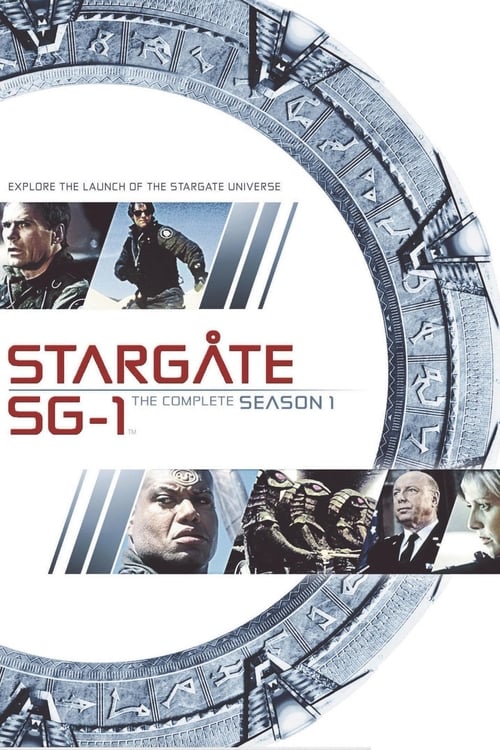
Stargate SG-1
Season 1 Analysis
Season Overview
A military-science expedition team discovering how to use the ancient device, named the Stargate, to explore the galaxy. However, they encountered a powerful enemy in the film named the Goa'uld, who are bent on destroying Earth and all who oppose them.
Season Review
Categorical Breakdown
The team is racially and gender-diverse, but all members operate on a clear, high standard of merit—Air Force officer, scientist, linguist, and warrior. The narrative does not rely on an intersectional hierarchy to define the characters' competence. A single, controversial early episode is criticized for deploying a 'white savior' trope where a white character liberates a non-white coded alien culture from their own sexist traditions, but this is a specific incident in an otherwise meritocratic season.
The central premise is the protection of Earth and, by extension, Western civilization, led by the US Air Force. The main enemy is a parasitic alien force, not a critique of the home culture or ancestors. The institution of the Stargate Command is portrayed as the essential shield for the planet. Antagonism comes from short-sighted politicians and bureaucrats who are depicted as obstacles to the moral, protective mission.
Captain Carter is portrayed as a highly intelligent and professionally competent Air Force officer and scientist. The male characters value her expertise, though her initial character introduction contains dialogue that requires her to assert her credentials in a male environment. One episode, 'Emancipation,' attempts a heavy-handed, self-conscious message about female oppression and liberation in an alien culture. Male lead Colonel O'Neill remains the undisputed commander and is not depicted as a bumbling idiot or a toxic figure. The dynamic is generally complementary, with one major exception.
The season is structured around a normative sexual and familial context, such as Daniel Jackson's core motivation to save his wife. There is no presence of centering alternative sexualities, deconstructing the nuclear family, or introducing gender ideology into the narrative, adhering to the standard conventions of late 1990s television.
The core premise of the series is a wholesale deconstruction of all ancient Earth polytheistic religions, revealing them to be the manipulative mechanism of the Goa'uld, a parasitic alien race. This strongly argues that all faith is based on lies, power dynamics, and exploitation. The hero team consistently attempts to liberate oppressed populations by proving to them that their 'gods' are merely aliens. The morality is entirely humanistic, focusing on rationalism, science, and freedom, placing the entire concept of traditional religion in a negative or false light.