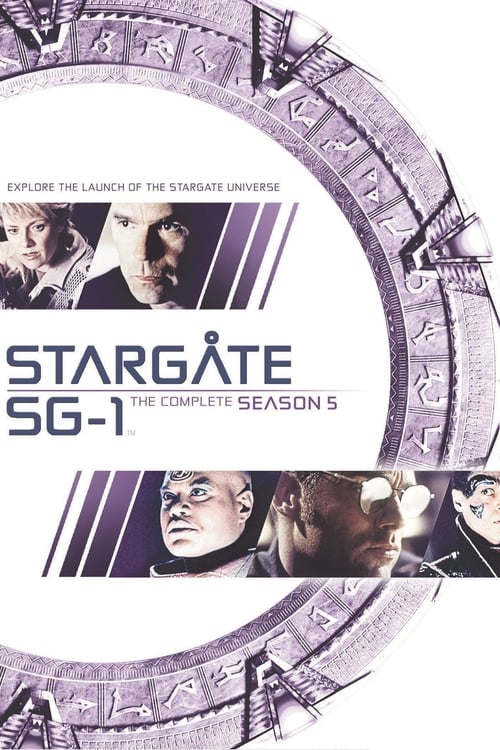
Stargate SG-1
Season 5 Analysis
Season Overview
SG-1 trains a team of raw cadets, and Colonel O'Neill is forced to take them into a real-life battle situation when he learns of a possible alien incursion at the S.G.C. After an accident with the Stargate traps Teal'c in transit, SG-1 must turn to Russia – and to their enemies – for help before time runs out.
Season Review
Categorical Breakdown
Characters are valued solely on their skill, loyalty, and moral fiber. Colonel O'Neill, a white male, is the clear leader, but his team (which includes a female scientist and a black alien warrior) operates on a system of universal meritocracy. Race and immutable characteristics are not a basis for conflict or an organizing principle for the narrative. The only diversity is organic to the military/scientific mission and is not forcefully inserted as a political lecture.
Western civilization, represented by the US Air Force's SGC, is portrayed as the primary institution protecting Earth and other planets from hostile alien empires. Internal conflicts exist (the NID's rogue actions), but these are framed as corruption that the main heroes must fight to *protect* their home and institutions. The narrative respects the sacrifices of the ancestors (the Ancients) and frames the Western military as a shield against chaos.
Major Carter is a brilliant scientist and military officer, a classic example of a competent female lead. She is highly respected for her intellect and expertise, often surpassing her male colleagues in technical knowledge. However, the men (O'Neill, Jackson, Hammond) are also depicted as intelligent, competent, and protective. Masculinity is not actively disparaged or emasculated. There is no overt anti-natalist or anti-family messaging in the season's major plots.
The season contains no explicit or implicit focus on alternative sexualities, sexual identity politics, or gender ideology. The narrative maintains a normative structure where sexuality is entirely private and not a driving force or lecture point within the military or exploratory context of the show.
The core mythology of the series is anti-false-god, as the Goa'uld are parasitic aliens posing as deities. This is a critique of tyranny and exploitation, not a critique of transcendent morality or traditional Earth religions (specifically Christianity). The concept of 'Ascension' for Daniel Jackson is introduced, which is a profound, metaphysical, and spiritual journey toward a higher moral and existential plane, reinforcing the presence of Objective Truth and a higher moral order.