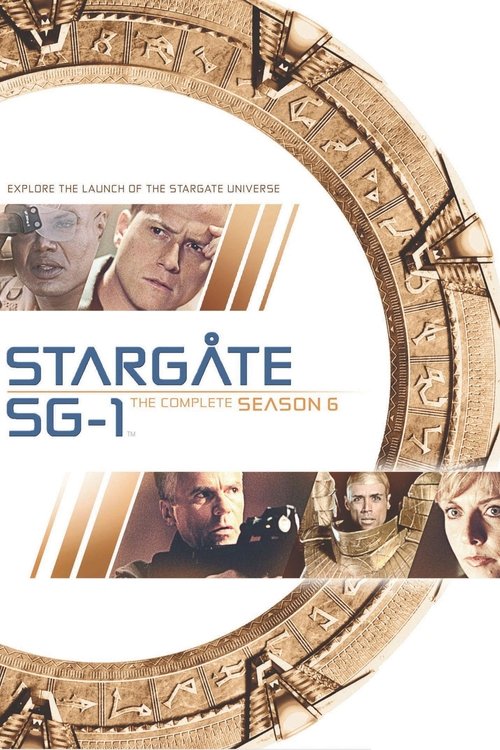
Stargate SG-1
Season 6 Analysis
Season Overview
O'Neill and Carter launch a risky plan with untested technology when Earth comes under attack by the Goa'uld. Carter must find a way to save Earth from total destruction at the hands of the Goa'uld, who have turned the Stargate into a doomsday bomb. Rya'c joins his father on a mission to destroy the Goa'uld weapon.
Season Review
Categorical Breakdown
Characters are consistently judged by competence and moral fortitude, not immutable characteristics. The new team member, Jonas Quinn, is evaluated solely on his merit and ability to contribute, embodying a universal meritocracy. Teal'c's status as a respected Free Jaffa warrior is central to his character arc. No vilification of 'whiteness' or forced insertion of diversity is evident.
The narrative is fundamentally centered on the heroic defense of Earth and Western/Tau'ri civilization. The introduction of the first human battleship, *Prometheus*, is framed as a point of pride and a necessary step for humanity to stand against the galaxy's great powers. While there are internal threats (Senator Kinsey and the NID), they are presented as corrupt individuals to be defeated by the SGC, an institution viewed as a 'shield against chaos.' There is no 'Noble Savage' trope; aliens are either enemies (Goa'uld, Replicators) or allies (Asgard, Tok'ra), judged by their actions, not their 'spiritual superiority.'
Major Carter is a hyper-competent Major and scientist whose genius is indispensable to the plot, but her competence is earned over many seasons, not a 'Mary Sue' instant perfection. Colonel O'Neill remains the decisive, protective, and competent leader, often making tough, utilitarian calls that are necessary to protect the galaxy. The dynamic is complementary, with no widespread emasculation of male characters, and no anti-natal or anti-family messaging is present, with General Hammond even expressing prioritizing his grandchildren.
The season contains no narrative focus on alternative sexualities, gender identity, or 'queer theory.' The sexual orientation of the characters is kept private and does not serve as a defining trait. The nuclear family unit remains the normative standard, with no themes deconstructing or vilifying it.
The core enemies, the Goa'uld, are false gods who use religion to enforce totalitarian slavery. The show is therefore *anti-false-theism* and anti-tyranny. The overall morality of the SGC remains one of objective truth and higher moral law (protecting the weak, upholding freedom). Faith itself is not demonized, and there are no instances of Christian characters being portrayed as villains or bigots.