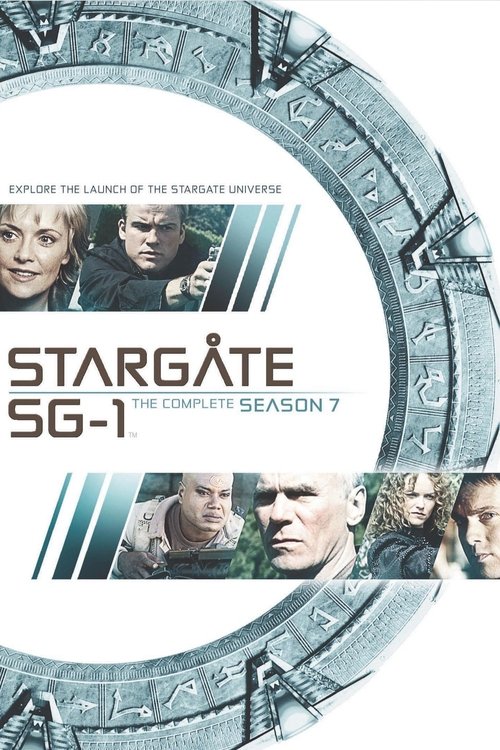
Stargate SG-1
Season 7 Analysis
Season Overview
SG-1 discovers Daniel Jackson alive and living on an alien world, with no memory of who he is. The team hatches a plan to lure Anubis into a trap and destroy his new super-weapon. The team returns to Jonas's homeworld when they learn that the Goa'uld are after its naquadria.
Season Review
Categorical Breakdown
The core team operates purely on merit, with a white female scientist, a black male alien warrior, a white male soldier, and a white male archaeologist all equally respected for their expertise. The white male leadership (General Hammond, O'Neill) is consistently depicted as competent and moral. Antagonistic forces on Earth, like Vice President Kinsey, are corrupt politicians, not representations of 'whiteness' or white males as an identity group.
The narrative's central motivation is the defense of Earth and Western civilization from immediate, overwhelming alien threats. The United States military and its base, the SGC, are consistently viewed as necessary institutions for protecting humanity. Institutions like the military and the American presidency are treated with respect, and the season concludes with an epic defense of Earth.
Samantha Carter is an extremely competent Major/Lt. Colonel, but this is a long-standing, earned character trait, not a 'Girl Boss' trope at the expense of the male team members. An episode introducing an all-female Jaffa rebellion highlights female strength in fighting back against the femicide and patriarchy of an alien Goa'uld (Moloc). While promoting female empowerment, it does not emasculate the main male characters, who maintain their distinct roles and competence. The death of Dr. Fraiser, a single mother, is treated as a profound tragedy, giving weight to her life and family role.
The season contains no discernible content related to centering alternative sexualities, queer theory, or deconstructing the nuclear family. The presentation of relationships and characters adheres strictly to a traditional, normative structure.
The main antagonists, the Goa'uld, are parasitic aliens who enslave humans by posing as ancient gods. The show's core conflict is explicitly anti-false-god, where religious fanaticism is a means of control and deception. The narrative, therefore, promotes a transcendent morality of freedom and self-determination against a power-dynamics-based system of evil, without targeting genuine Earth-based faith systems.