Anaconda
Plot
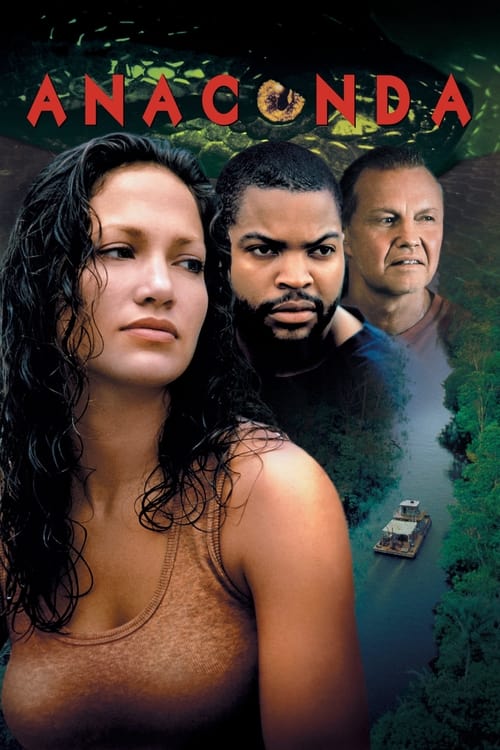
A 'National Geographic' film crew is taken hostage by an insane hunter, who takes them along on his quest to capture the world's largest — and deadliest — snake.
Get the Weekly Woke Watchlist
New and trending movies scored for woke bias, preachy messaging, and forced political themes — before you waste your evening.
No spam. One useful email per week.
Overall Series Review
Categorical Breakdown
The film does not contain lectures on privilege or systemic oppression. Character merit is the defining trait for survival. The casting, featuring a Latina lead and a Black co-lead, is notably diverse for its time, but this diversity is presented as an ensemble of professionals defined by their job, not their immutable characteristics. The primary villain is a greedy, amoral poacher whose evil is universal, not tied to any specific race or class.
The setting in the remote Amazon critiques the greed and exploitation of Western poachers who violate the natural environment. One character expresses concern about disrupting the ecological balance. This slight emphasis on the 'Noble Savage' archetype, represented by the uncontacted tribe and the sanctity of nature, mildly frames outside human interference as destructive. However, the film's focus remains on the action-horror, not a deconstruction of Western heritage or culture.
The director of the expedition, Terri Flores, is the undisputed, most competent, and ultimately successful survivor and hero of the film. She is a classic 'Girl Boss' archetype who consistently demonstrates more capability than most of her male counterparts. The male characters are depicted as either incapacitated (the professor), bumbling (the sound engineer), or pure evil (the snake hunter). The narrative ends with the female lead's triumph over both the male antagonist and the monster, which significantly emasculates the male roles.
The movie contains no themes, characters, or dialogue pertaining to alternative sexualities, gender ideology, or the deconstruction of the nuclear family. The structure is entirely normative with regard to gender and sexuality, focused only on the immediate survival plot.
There is no overt hostility or deference toward religion or Christianity. The story takes place in a secular environment of academic pursuit and pure survival horror. Moral choices exist—help the villain or stop him—but the morality is purely utilitarian for survival, not tied to any transcendent or religious framework. The film avoids a spiritual vacuum by focusing on a tangible monster and human greed, making it morally neutral in a spiritual sense.
Get the Weekly Woke Watchlist
New and trending movies scored for woke bias, preachy messaging, and forced political themes — before you waste your evening.
No spam. One useful email per week.