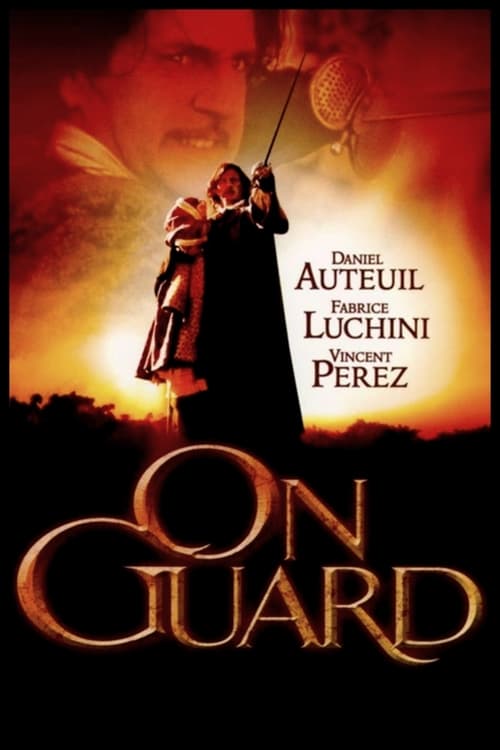
On Guard
Plot
France, 17th century, during the reign of Louis XIII. When a dear friend, the Duke of Nevers, is treacherously assassinated by a powerful relative, a skilled swordsman, the noble Henri de Lagardère, seeks his rightful vengeance as he tries to protect the innocent life of the duke's last heir.
Get the Weekly Woke Watchlist
New and trending movies scored for woke bias, preachy messaging, and forced political themes — before you waste your evening.
No spam. One useful email per week.
Overall Series Review
Categorical Breakdown
Characters are defined entirely by their personal honor, skill, and moral choices. Lagardère is a man of humble origins whose merit as a swordsman earns him the respect of the Duke, demonstrating a universal meritocracy. The villain is a white male aristocrat driven by self-serving greed, while the hero is also a white male who upholds justice, preventing any vilification of "whiteness" or reliance on an intersectional lens. The conflict is between good and evil individuals, not racial or social groups.
The movie is a lavish, celebratory homage to the French swashbuckler tradition, set against a beautifully rendered and respected 17th-century backdrop. The core plot is about restoring a noble family's rightful line and inheritance, an act of historical preservation and loyalty. The Western home culture (17th-century France) is not framed as fundamentally corrupt; the evil is contained within the individual villain, Count Gonzague, not the civilization itself.
The main action revolves around the male hero's protective duty toward the child, Aurore, a vital female character who grows into a spirited young woman. The story celebrates the bond of fatherhood and the importance of a rightful family lineage. Aurore is a spunky heroine, but her role is complementary and she is a daughter who needs her guardian to restore her birthright, not a perfect, instantly capable 'Girl Boss' who emasculates the male hero. Motherhood, in the context of the Duke and Blanche, is the catalyst for the entire honorable duty.
The narrative centers on a traditional male-female pairing (Lagardère eventually falls in love with the grown Aurore) and the protection of the nuclear family's lineage, even though the child was born out of wedlock before the Duke’s intended marriage. Sexual ideology is not present as a theme, and the structure of the traditional family is affirmed as the standard that must be protected and restored. There is no deconstruction of the nuclear family.
The primary themes are transcendent in nature: honor, loyalty, justice, and duty. These concepts reflect a higher moral law guiding the hero's actions. While not overtly religious, there is no hostility toward religion, nor are faith or Christian characters depicted as villains or bigoted figures. The conflict is purely secular, focused on power and wealth, leaving the moral and spiritual framework intact.
Get the Weekly Woke Watchlist
New and trending movies scored for woke bias, preachy messaging, and forced political themes — before you waste your evening.
No spam. One useful email per week.