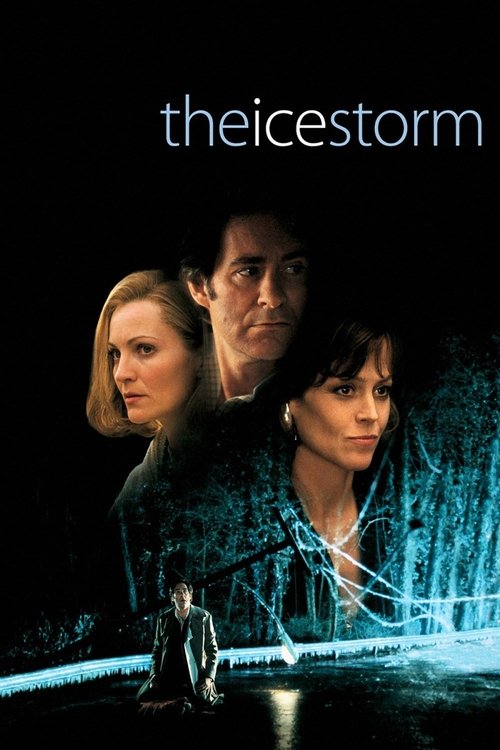
The Ice Storm
Plot
In the weekend after thanksgiving 1973 the Hood family is skidding out of control. Then an ice storm hits, the worst in a century.
Get the Weekly Woke Watchlist
New and trending movies scored for woke bias, preachy messaging, and forced political themes — before you waste your evening.
No spam. One useful email per week.
Overall Series Review
Categorical Breakdown
The core conflict revolves around moral and emotional failure, not race, class, or intersectional hierarchy. The main characters are uniformly white and affluent, directly reflecting the specific suburban setting and historical period of 1973. There is no forced insertion of diversity, vilification of 'whiteness' as a political category, or lecturing on systemic oppression; all characters are flawed due to their personal choices and character failings.
The movie is an intense critique of American suburban culture during the 1970s, showcasing institutions like marriage and family as hollow, emotionally bankrupt, and hypocritical. The affluent home is shown as a cage, full of material wealth but lacking spiritual health. However, the narrative arc moves toward a profound re-commitment to family and human connection after a tragedy, suggesting the failure is with the characters' behavior, not the fundamental institutions themselves, avoiding a 10/10 total civilizational self-hatred score.
The male figures, particularly the primary father figure, are heavily denigrated, depicted as weak, self-involved, incompetent, and buffoonish in their attempts at parenting and adultery. Adult female characters are deeply flawed—one is an icy, indifferent seductress, and the other is a disillusioned, frustrated wife—neither fitting the 'Girl Boss' trope of perfection. The emphasis on male incompetence and toxicity, coupled with the family unit's breakdown as a result of the adults' selfish pursuits, places the score high.
The sexual content focuses exclusively on heterosexual infidelity and adolescent sexual experimentation, rooted in the 'free love' culture of the 1970s. The narrative does not contain any themes related to centering alternative sexualities, promoting gender ideology, or deconstructing the nuclear family through a Queer Theory lens. The portrayal of sexual promiscuity is shown as a source of confusion and pain, not as a celebration of identity.
The film is characterized by a pervasive spiritual vacuum and moral relativism in practice, where the characters' self-indulgent choices lead directly to tragedy. A Thanksgiving dinner scene is notable for featuring a politically charged 'prayer' that lambastes material wealth, highlighting the hypocrisy and emptiness of traditional rituals for the family. The film ultimately uses a cataclysmic natural event to restore a sense of objective moral weight, as the consequence of immorality forces a raw, painful reckoning and a search for transcendent meaning beyond the 'Me' decade's nihilism.
Get the Weekly Woke Watchlist
New and trending movies scored for woke bias, preachy messaging, and forced political themes — before you waste your evening.
No spam. One useful email per week.