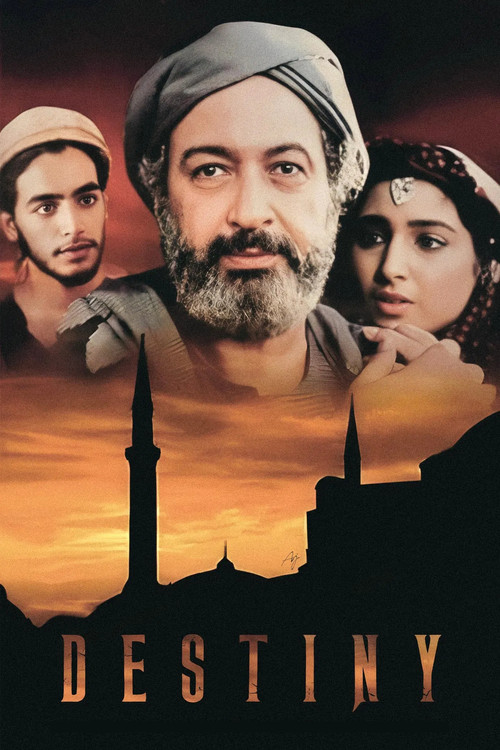
Destiny
Plot
In the 12th century's Andalusia lives Ibn Rushd a prominent Islamic philosopher with his wife Zeinab and daughter Salma. The principality is ruled by Khalifa ElMansour who has two sons, ElNasser, an intellectual that likes Ibn Rush and is in love with his daughter Salma. The younger son Abdallah is more into dancing and poetry, spending most of his times with the gypsy family and getting the daughter pregnant. The Khalifa is depending on the extremists to build his army granting them more power which they use to combat artists and philosophers. The extremists succeed in recruiting Abd Allah and train him to kill his father. Events go on where Marawan, the gypsy singer, is killed and Ibn Rushd's books are burnt. Adapted from the real life of Ibn Rushd AlMasir is Chahine's statement against extremism.
Get the Weekly Woke Watchlist
New and trending movies scored for woke bias, preachy messaging, and forced political themes — before you waste your evening.
No spam. One useful email per week.
Overall Series Review
Categorical Breakdown
The core struggle pits intellectualism and philosophy against political extremism and censorship. The characters are judged by their ideological stance and personal actions, such as the love between the intellectual son and the philosopher's daughter, and the betrayal by the younger son. The conflict is internal and ideological, not based on race or immutable characteristics.
The story's hero, Ibn Rushd, is a defender of the high culture and intellectual traditions of his civilization. The narrative strongly criticizes the elements of power and fanaticism that seek to destroy this heritage, such as the burning of books, framing this internal self-destruction as the true danger. The film is a defense of the home culture's best, most rational aspects.
The plot primarily centers on the political and intellectual lives of male characters—the philosopher, the Khalifa, and his two sons. The narrative details traditional family roles, with a wife and daughter, and a heterosexual relationship resulting in pregnancy. There is no evidence of a 'Girl Boss' trope, the emasculation of men, or anti-natalist messaging.
The standard pairing is between male and female characters, such as the love between ElNasser and Salma and the relationship between Abdallah and the gypsy daughter that results in pregnancy. The story maintains a normative structure with sexuality as a private matter and does not introduce themes of queer theory or gender ideology.
The central theme is a defense of rational, philosophical spirituality (Ibn Rushd's work) against dogmatic religious extremism and the misuse of faith for political power. The film does not target religion or faith itself but rather the political manipulation and violence committed in its name, upholding a concept of transcendent morality found through reason and intellect.
Get the Weekly Woke Watchlist
New and trending movies scored for woke bias, preachy messaging, and forced political themes — before you waste your evening.
No spam. One useful email per week.