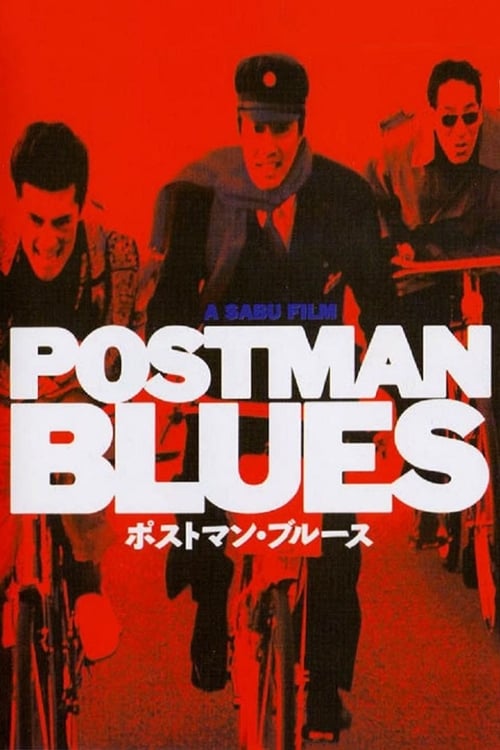
Postman Blues
Plot
Sawaki is a postman who's not quite thrilled about his boring way of life. But his life is about to change when he delivers mail to his old schoolmate Noguchi, who's now a member of the Yakuza, the Japanese Mafia, and just finished cutting his little finger off.
Get the Weekly Woke Watchlist
New and trending movies scored for woke bias, preachy messaging, and forced political themes — before you waste your evening.
No spam. One useful email per week.
Overall Series Review
Categorical Breakdown
The narrative is centered entirely on a universal quest for purpose and identity, independent of race or any immutable characteristic. All main characters are Japanese, and the conflict is a blend of personal choices and absurd circumstance, not systemic oppression. Characters are judged by their kindness, like the postman Sawaki, or their desire for meaning, like the hitman Joe.
The film’s satire is localized, criticizing the bumbling incompetence of the Japanese police force and the dull conformity of the Japanese 'salaryman' existence. It is not an attack on Western civilization, nor does it elevate external cultures as morally superior. The setting is grounded in its Japanese context without demonstrating hostility toward its own home and ancestors.
The main female character, Sayoko, is a suicidal cancer patient who finds love and a new will to live through her romantic connection with the male protagonist, Sawaki. This relationship is a source of vitality and purpose for both characters, which counters anti-natalist or anti-family messaging. One other female character is an assassin, but the primary gender dynamic is complementary, supporting a low score.
The primary relationship in the movie is a traditional, normative male-female pairing. The plot does not center on alternative sexualities, nor does it deconstruct the nuclear family structure. Sexuality remains a private aspect of the characters’ lives without any political lecturing on gender or sexual identity.
The core themes are existential—a search for meaning, purpose, and relief from the mundane. This search for transcendence is not depicted as hostile toward traditional religion. There are no religious characters portrayed as villains or bigots, and morality is explored through personal choices and an objective good (kindness), not purely subjective 'power dynamics'.
Get the Weekly Woke Watchlist
New and trending movies scored for woke bias, preachy messaging, and forced political themes — before you waste your evening.
No spam. One useful email per week.