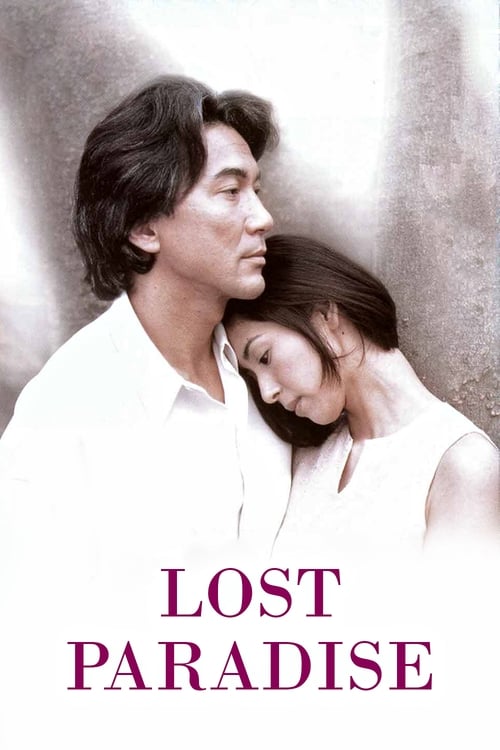
Lost Paradise
Plot
Kuki is a veteran newspaper reporter who has been shuffled off to a book-development branch and finds escape in an illicit relationship with Rinko. Together they find the passion no longer present in their marriages.
Get the Weekly Woke Watchlist
New and trending movies scored for woke bias, preachy messaging, and forced political themes — before you waste your evening.
No spam. One useful email per week.
Overall Series Review
Categorical Breakdown
The film focuses on a personal, romantic conflict between two individuals of the same race and class background. Character merit and emotional state drive the plot, not immutable characteristics or intersectional hierarchy. The story contains no political lecture on race or systemic oppression outside of the universal pressure of social conformity.
The film is a direct critique of the perceived emotional emptiness and stifling conformity within modern Japanese social structures, framing the traditional 'home' life and marital duty as a cage that must be escaped. This critique is directed toward the protagonists' native, non-Western culture, making the 'civilizational self-hatred' element specific to *Japanese* norms rather than 'Western civilization' or its ancestors. Core Western institutions are not the focus of vilification.
The female lead, Rinko, chooses to completely abandon her role as a wife and homemaker to pursue an all-consuming passion. Her fulfillment is found outside the nuclear family structure, which is depicted as a deadening prison. Her actions prioritize personal, erotic desire over duty and motherhood, functioning as a complete deconstruction of traditional family obligations. The male character, Kuki, is a willing partner in this radical abandonment of duty.
The primary relationship is a heterosexual one, and the conflict centers on the violation of the traditional male-female pairing via infidelity. The narrative contains no elements of centering alternative sexualities, promoting gender ideology, or deconstructing the nuclear family using the Queer Theory lens. Sexuality is presented as a private, intense, and passionate element of the affair, but it remains strictly within a male-female framework.
The story strongly embraces moral relativism, positioning the characters' subjective, erotic passion as a transcendent force superior to social ethics and traditional morality. The lovers seek liberation and define their own truth outside of any objective moral law. The ultimate act is a choice for a self-defined, sublime end, which is a complete rejection of societal and traditional religious constraints and an embrace of passion as the highest value.
Get the Weekly Woke Watchlist
New and trending movies scored for woke bias, preachy messaging, and forced political themes — before you waste your evening.
No spam. One useful email per week.