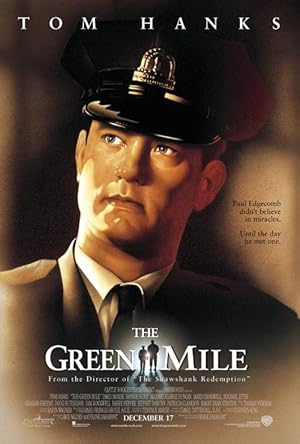
The Green Mile
Plot
Death Row guards at a penitentiary, in the 1930's, have a moral dilemma with their job when they discover one of their prisoners, a convicted murderer, has a special gift.
Get the Weekly Woke Watchlist
New and trending movies scored for woke bias, preachy messaging, and forced political themes — before you waste your evening.
No spam. One useful email per week.
Overall Series Review
Categorical Breakdown
The central conflict is the tragic injustice and execution of John Coffey, an innocent Black man, which is explicitly framed as an act of systemic racial oppression by the 1930s Southern legal system. The narrative relies entirely on Coffey’s immutable characteristic (race) to explain his false conviction and the authorities' refusal to grant a retrial. The primary villains (Percy Wetmore, Wild Bill Wharton) are white males depicted as incompetent and evil figures who abuse their institutional power.
The film heavily critiques a core Western institution, the American justice system, portraying it as fundamentally corrupt and incapable of delivering justice in the face of racial prejudice. The main protagonist, a moral white prison guard, is shown to be ultimately powerless to save the innocent man because the system is designed to uphold injustice. This demonizes the system, but individual protagonists are depicted as moral men who respect their culture’s traditions of marriage and faith.
Female characters are marginal to the main action. Women are primarily defined by their traditional roles as wives (Janice Edgecomb, Melinda Moores) or as victims (the murdered twin girls). Melinda Moores is miraculously healed and is a source of spiritual comfort, but she is not a 'Girl Boss' or an agent of change in the plot’s primary conflict. Masculinity is portrayed as protective and moral in the heroic guards, while the villainous guards are emasculated by their cowardice and cruelty.
The narrative includes no overt LGBTQ+ characters, themes, or ideology. All relationships featured or referenced (Paul/Janice, Hal/Melinda) are traditional male-female pairings. The film maintains a completely normative structure with respect to sexuality and gender.
The film’s thematic foundation is a direct Christ-like allegory, with John Coffey as a divine, miraculous figure who suffers for the world's sins and is unjustly executed. The story’s moral center, Paul Edgecomb, has a crisis of faith in the legal system, but this is immediately superseded by an affirmation of transcendent morality and spiritual grace. Faith is portrayed as a source of strength, directly opposing the idea that traditional religion is the root of evil.
Get the Weekly Woke Watchlist
New and trending movies scored for woke bias, preachy messaging, and forced political themes — before you waste your evening.
No spam. One useful email per week.