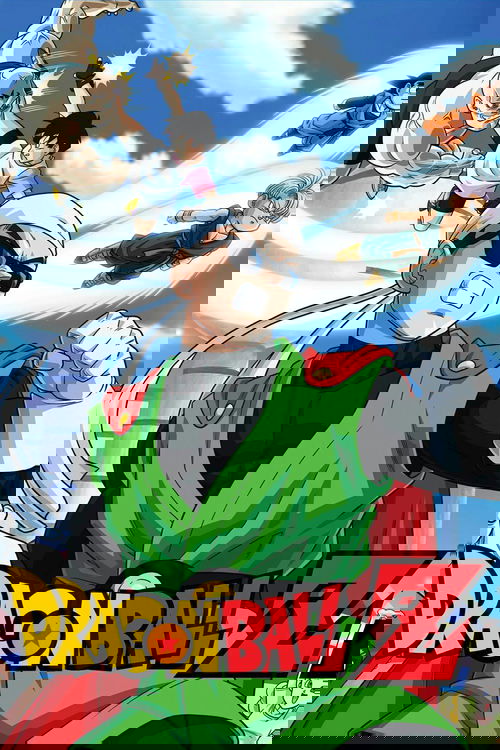
Dragon Ball Z
Season 7 Analysis
Season Overview
In the seven years since Cell’s defeat, life on Earth has returned to normal. But now, the time has come for a new World Martial Arts Tournament. Goku returns from Other World to challenge Mr. Satan for his title – and to guard against the arrival of a new evil!
Season Review
Categorical Breakdown
Characters are judged exclusively on their strength, skill, and moral character. Their race (human, Saiyan, Namekian, alien) is a factor only in terms of physical abilities and potential, not as a source of intersectional oppression or privilege. There is no vilification of 'whiteness' or forced diversity; casting is colorblind to the extreme, given the show's focus on non-human characters and an already globally diverse human cast. The narrative is driven entirely by universal meritocracy and power levels.
The score is a 3/10, reflecting a slight deconstruction of 'home' civilization, but not hostility. The World Tournament Saga explicitly critiques Earth's modern culture, portraying it as soft, celebrity-obsessed (Mr. Satan), and valuing spectacle over genuine martial arts skill. This frames the mundane 'home culture' as foolish and degraded compared to the transcendent values of the Z-Fighters' ancient martial arts and alien heritage. However, the goal remains the sacred duty to protect Earth and its people, not to destroy or lecture them.
The introduction of Videl, an extremely strong, proactive female crime-fighter who forces the protagonist Gohan to teach her how to fly, provides a template for a 'Girl Boss' character. She achieves her power through merit, dedication, and training, not instantly, which prevents a 'Mary Sue' rating. Males like Gohan are not emasculated but shown to be supportive mentors. Motherhood is not framed as a 'prison'; Chi-Chi is shown to be a strict but loving mother and appears to have softened her anti-training stance for Goten.
The season maintains a completely normative structure. The central romantic plot is the traditional male-female courtship between Gohan and Videl. There is no presence of alternative sexualities being centered, deconstruction of the nuclear family model (which is seen flourishing with Goten and Trunks), or any lecturing on gender ideology. Sexuality is a private matter, strictly in the context of traditional pairing.
The season firmly embraces transcendent morality and a spiritual hierarchy. It introduces the Supreme Kai and Kibito, the most powerful and objective moral authorities in the universe, who are explicitly 'good' and oppose the cosmic evil of Babidi and Majin Buu. Faith in higher powers (like King Kai, Supreme Kai) is a source of information and strength. Objective truth (good versus evil) and a higher moral law are the driving forces of the main conflict, placing the content at the lowest end of the scale.