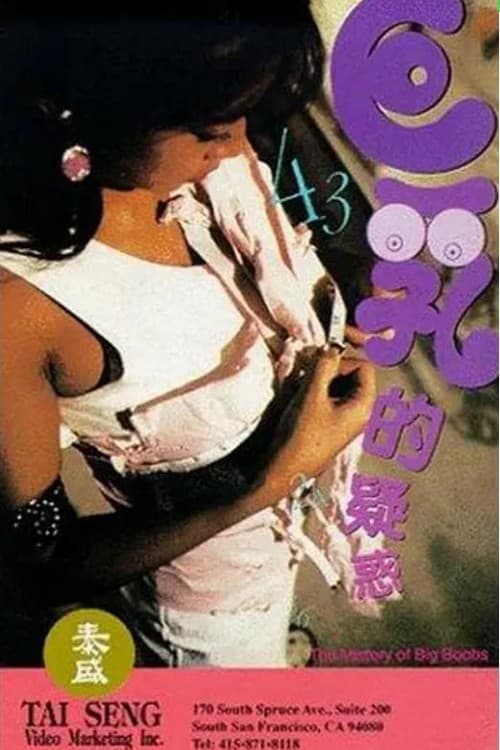
The Mystery of Big Boobs
Plot
Lan Hou and Hui Qi are two homely friends who work for a Hong Kong company. Lily is the head of their financial department and she uses her voluptuous body to climb the corporate ladder. After seeing that Lily's business and private life are booming just by showing off her figure, Lan decides to get into shape. However, to be really successful, she also needs a bigger bosom, so she decides to consult doctors, priests and mystics. Eventually she finds a solution to her flat chest problem.
Get the Weekly Woke Watchlist
New and trending movies scored for woke bias, preachy messaging, and forced political themes — before you waste your evening.
No spam. One useful email per week.
Overall Series Review
Categorical Breakdown
The narrative's central conflict revolves entirely around a physical characteristic and its perceived corporate value, not race, whiteness, or systemic oppression. The characters are of Hong Kong/Chinese ethnicity, and the focus is on physical merit (or lack thereof) for career advancement.
The setting is a local Hong Kong company, and the themes are internal to the corporate environment and cultural expectations of beauty. There is no element of civilizational self-hatred, hostility toward Western culture, or demonization of ancestors.
The female protagonist's path to success is presented as being entirely dependent on physical self-modification and sexualization, embodying the opposite of meritocracy. The plot validates the idea that a woman's body, used as a transactional asset, is the primary key to power, which critiques male-dominated structures but reinforces objectification. This high score is due to the narrative positioning the *physical* over the career, where the only way to be a 'Girl Boss' (like Lily) is through physical allure.
The story exclusively focuses on traditional male-female corporate and romantic dynamics. There is no presence of alternative sexualities, deconstruction of the nuclear family, or advocacy for gender ideology. Sexuality is treated as a component of the heterosexual ambition plot.
The protagonist, in her desperation for superficial physical gain, consults 'priests and mystics' alongside doctors. This inclusion suggests a satirical or cynical view of spiritual and religious authorities, framing them as being commodified or sought out for entirely trivial, materialistic ends. Religion is not demonized, but it is treated as an ineffectual or ridiculous option in a quest for a larger chest.
Get the Weekly Woke Watchlist
New and trending movies scored for woke bias, preachy messaging, and forced political themes — before you waste your evening.
No spam. One useful email per week.