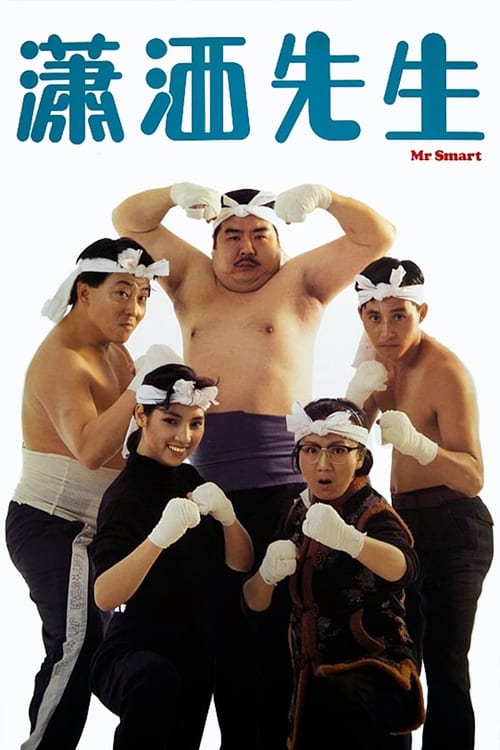
Mr. Smart
Plot
Smart (Kent Cheng), a sailor, returns from sea to his family to help with the family business and raise money for repairs, also teach people about love
Get the Weekly Woke Watchlist
New and trending movies scored for woke bias, preachy messaging, and forced political themes — before you waste your evening.
No spam. One useful email per week.
Overall Series Review
Categorical Breakdown
The film is a Hong Kong production featuring an ethnically homogeneous cast, with the plot centered on a family's economic struggle and Smart's efforts to improve their situation. Character judgment is based on individual actions and personal merit, such as the protagonist's resourcefulness. The narrative does not contain commentary on race, intersectional hierarchy, or the vilification of any immutable characteristics, scoring a perfect one.
The central action of the plot is Smart returning to his family's dilapidated dwelling to raise money for repairs and build a new house, driven by a desire to help his mother and sister. This narrative focus on improving one's home and protecting the family unit acts as a direct validation of one's own community and values. The film contains no hostility toward its own culture or ancestors, scoring a perfect one.
The movie includes a character-driven focus on the love lives of those around the protagonist, and the goal is to help his sister and mother. While the main character is a male 'know-it-all' who attempts to organize others' lives, there is no evidence of male emasculation or the active preaching of an anti-natalist or 'Motherhood is a prison' message. The female characters are integral to the family unit and the emotional plot, suggesting a more traditional, complementary view of gender roles, which warrants a very low score.
The narrative's explicit goal is for the protagonist to 'teach people about love' and to organize the love lives of those around him, which, in the context of a 1989 Hong Kong family-comedy, focuses exclusively on traditional male-female pairings. There is no presence of sexual ideology, centering of alternative sexualities, deconstruction of the nuclear family, or lecturing on gender theory, resulting in a perfect one.
The core plot is entirely secular, revolving around family, money, business, and romance, with no indication of religious themes, conflict, or characters. There is no portrayal of Christian characters as villains or bigots, and the narrative does not embrace moral relativism as a philosophical concept. The absence of religious themes means the film does not engage in anti-theistic messaging, scoring a perfect one.
Get the Weekly Woke Watchlist
New and trending movies scored for woke bias, preachy messaging, and forced political themes — before you waste your evening.
No spam. One useful email per week.