South Park
Season 15 Analysis
Season Overview
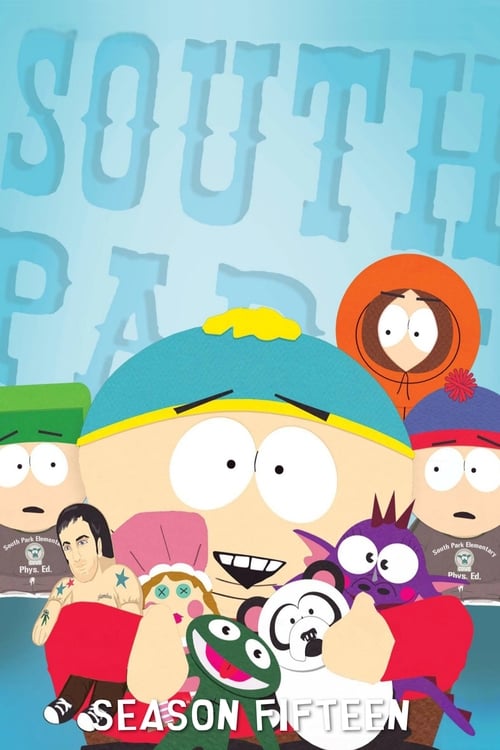
Join Stan, Kyle, Cartman and Kenny in the fifteenth season as they confront modern mad scientists, fundamentalist agnostics, and face their greatest challenge yet -- Stan growing a year older. For them, it's all part of growing up in South Park.
Season Review
Categorical Breakdown
The episode 'The Last of the Meheecans' is a strong piece of political satire about the immigration debate, but the narrative targets American laziness and the absurdity of border policy rather than vilifying 'whiteness' or relying on an intersectional power hierarchy. The central hero of the episode is a white child, Butters, who is mistaken for a Mexican national hero named Mantequilla, which subverts the concept of authentic identity being the source of merit. The humor comes from the equal incompetence of the American Border Patrol and the mass exodus of Mexican laborers, causing the US economy to collapse.
The mid-season arc, featuring Stan Marsh's profound cynicism where he perceives everything—art, culture, and life itself—as 'shit,' delves deep into themes of cultural malaise and self-hatred. Stan's father, Randy, expresses his personal unhappiness with his life, leading to the dissolution of the nuclear family through divorce. However, the show's narrative frames this extreme cynicism and deconstruction as a negative, miserable state for the main character, and the story is ultimately resolved by retreating from the permanent self-destruction, leaning back toward the stability of the traditional format.
The season features Stan's parents getting a divorce, which represents a deconstruction of the nuclear family. The divorce, however, is prompted by the husband's childish immaturity and a general marital drifting apart, not an ideological critique of motherhood as a 'prison' or marriage as oppressive. Female characters like Sharon and Wendy maintain their distinct personalities but are not featured in a plot that relies on the 'Girl Boss' trope or the forced elevation of women as universally superior to bumbling men.
No major episode plotline centers on deconstructing the nuclear family, promoting a specific queer theory, or teaching gender ideology to children. The existing character of Mrs. Garrison continues her controversial, long-running satirical arc from previous seasons, but this is a continuation of a character's journey rather than an introduction of a new, affirming or ideological message about sexual identity.
The season finale, 'The Poor Kid,' satirizes a group of 'strict agnostics' who enforce their moral and cultural uncertainty with dogmatic zeal, forcing children to only drink Dr. Pepper because its flavor is 'neither root beer nor cola' and is thus fundamentally uncertain. This is consistent with the show's overarching philosophical position, which is one of anti-dogmatism that targets ideological extremism across all belief systems, including secular ones, rather than strictly focusing hostility on traditional religion.