South Park
Season 17 Analysis
Season Overview
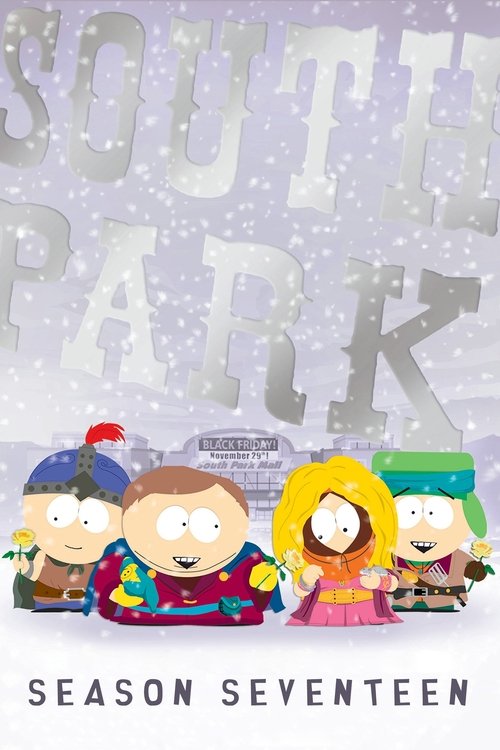
Join Stan, Kyle, Cartman and Princess Kenny as they infiltrate the NSA, thwart patient zero, tame some strange and fight in the greatest battle of their young, hot lives.
Season Review
Categorical Breakdown
The episode 'World War Zimmerman' satirizes the media's intense focus on race following a national tragedy. Cartman's fear-mongering and blackface are presented as absurd, not as a genuine critique of 'whiteness' or an endorsement of systemic oppression. Characters are defined by their personal flaws, such as Cartman’s paranoia, rather than their immutable characteristics.
Satire is aimed at specific modern institutions, such as the incompetent DMV and the overreaching NSA in 'Let Go, Let Gov.' The 'Black Friday' trilogy targets consumer greed and pop-culture obsessions. The narrative critiques contemporary American failures and consumerism, but it does not demonize Western heritage or ancestors as fundamentally corrupt.
The episode 'The Hobbit' critiques the toxic standards of celebrity and media culture that push women toward body dysmorphia and Photoshop. Female character Wendy is the moral anchor of the episode, but the story ends with her being corrupted by the very system she fights. The plot focuses on a critique of media, not a 'Girl Boss' trope or the emasculation of men.
The episode 'Goth Kids 3: Dawn of the Posers' deals with subculture conformity and non-conformity, specifically satirizing Goth and Emo identity. The focus is entirely on arbitrary aesthetic distinctions. There is no presentation or centering of alternative sexualities, gender identity, or queer theory as essential to the plot.
The episode 'Ginger Cow' lampoons religious fundamentalism by having Cartman fake a prophecy to create world peace. The narrative treats religious belief and prophecy as arbitrary and prone to absurd conflict. The show’s worldview is often nihilistic, which aligns with moral relativism, but it does not specifically frame Christian characters as bigots or the root of evil.