South Park
Season 2 Analysis
Season Overview
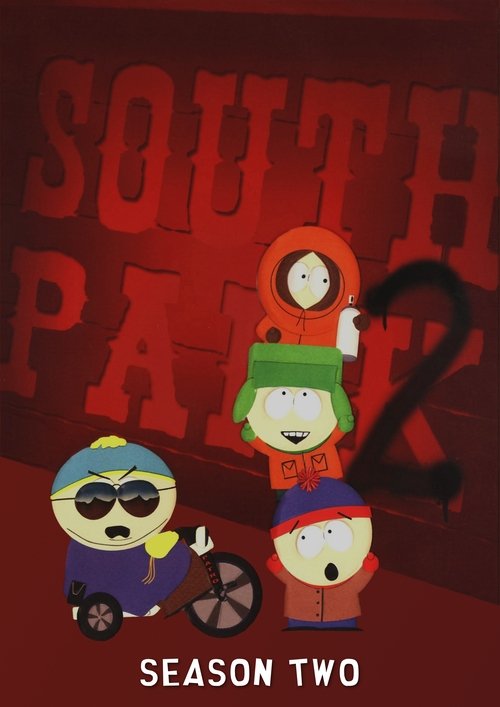
Join Stan, Kyle, Cartman and Kenny as they discover the identity of Cartman's father, learn about Conjoined Twin-Myslexia and thaw a prehistoric ice man. For them, it’s all part of growing up in South Park!
Season Review
Categorical Breakdown
The narrative does not rely on an intersectional lens or privilege hierarchy. It satirizes performative activism directly in 'Conjoined Fetus Lady,' mocking Sheila Broflovski’s attempt to impose 'awareness' on a physically disabled nurse who prefers anonymity. White male characters are often incompetent, but so are all characters, and the boys are consistently the universal moral center. Character judgment rests entirely on behavior, not immutable characteristics.
The series constantly portrays the town of South Park as a ridiculous, dangerous, and chaotic place where all adults are morons. This is a deconstruction of 'home' and a critique of local culture. However, the season also contains a defense of capitalism and small businesses against corporations in 'Gnomes,' and the primary message is usually the foolishness of the townspeople, not the fundamental corruption or racism of the entire Western system. The show treats America's sacred cows with disrespect, but without a clear 'Noble Savage' trope or a specific demonization of ancestors.
Female characters like Liane Cartman are depicted as hyper-promiscuous and Liane is revealed to be a hermaphrodite in a crass twist, which is purely for shock and plot, not for a message of empowerment. Sheila Broflovski is an archetypical busybody and hysterical moralizer, a negative portrayal of an activist female. The show critiques the adult female characters' flaws rather than promoting an ideological 'Girl Boss' trope or an explicit anti-natalist message, which keeps the score low.
The score is elevated slightly due to the central plot point of Liane Cartman being a hermaphrodite who 'impregnated' Cartman’s actual mother, using an intersex biological reality for a shock-comedy punchline. This uses non-normative biology as a source of plot and humor, but it does not engage in a serious, ideological deconstruction of the nuclear family through a queer theory lens or focus on 'transitioning.' Mr. Garrison is a white male teacher who is already an unstable cross-dresser with a hand-puppet, not a centered LGBTQ+ figurehead.
Religion is not treated as the 'root of evil,' but as a source of consumerist entertainment. The character Jesus hosts a low-rated, trivial celebrity talk show ('Jesus and Pals'), satirizing the commercialization of faith and media sensationalism. While the show's morality is highly relativistic, derived from the boys’ reactions to adult hypocrisy, it is not an explicit promotion of moral relativism as a formal philosophy or an aggressive vilification of Christianity, instead lampooning its presence in popular culture.