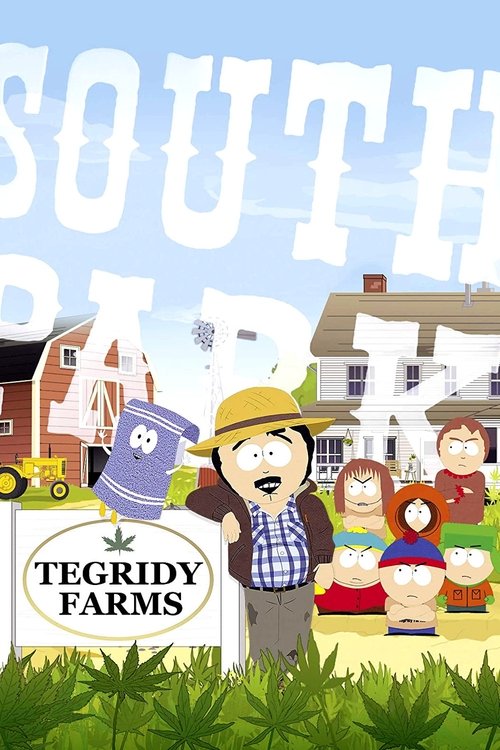
South Park
Season 23 Analysis
Season Overview
Join Stan, Kyle, Cartman, Kenny, and Randy as they explore the wonders of the human biome, tackle the consequences of immigration, and get banned in China. For them, it’s all part of growing up in South Park!
Season Review
Categorical Breakdown
The first episode dedicates significant time to the US border crisis, showing the Broflovski family detained by ICE, which directly addresses the issue of race and systemic oppression. ICE agents are shown to be paralyzed by the fear of being labeled 'racist' after a white/Jewish family is mistakenly detained. The narrative depicts the White family, a caricature of conservative voters, casually adopting a caged child from the detention center as a pet, treating ethnicity as a commodity. The Mexican Joker character’s origin is framed as a consequence of the system's cruelty, lecturing on how 'the system' creates villains.
The 'Band in China' episode strongly criticizes the American entertainment industry, including Disney and the NBA, for self-censoring and compromising principles of free expression to profit from the Chinese market. This plot acts as a strong defense of core Western values (free speech) against foreign authoritarianism, preventing a high score. However, the first and last episodes harshly condemn US immigration detention policy, portraying the system as fundamentally cruel and dysfunctional, suggesting a profound lack of confidence in the country's institutional integrity.
One episode focuses on the women of South Park attempting to join the male-dominated board gaming community and the introduction of a character named Strong Woman, a transgender athlete who is a physical parody of a male wrestler. While the girls prove capable in gaming, the primary male characters are central to the main 'Tegridy Farms' arc of the season. The show's focus is on satirizing 'Girl Boss' tropes and performative inclusion rather than outright promoting an anti-natalist or emasculating agenda.
The character 'Strong Woman' is introduced in a storyline that directly critiques the inclusion of transgender athletes in women's sports. The character is a massive, hyper-masculine caricature, directly satirizing the idea that biological men can easily dominate women's sports by simply identifying as female. The narrative centers on this controversial aspect of gender ideology, a prime example of the 'Queer Theory Lens' being actively engaged.
The season finale features both Santa Claus and Jesus Christ engaging in a drug-related plotline involving cocaine. The depiction of two central figures of Western religion casually participating in illegal drug use serves as direct irreverence and a mockery of their sacred status. This plot strongly contributes to the theme of a spiritual vacuum and moral relativism, where no figure or institution is sacred.