South Park
Season 4 Analysis
Season Overview
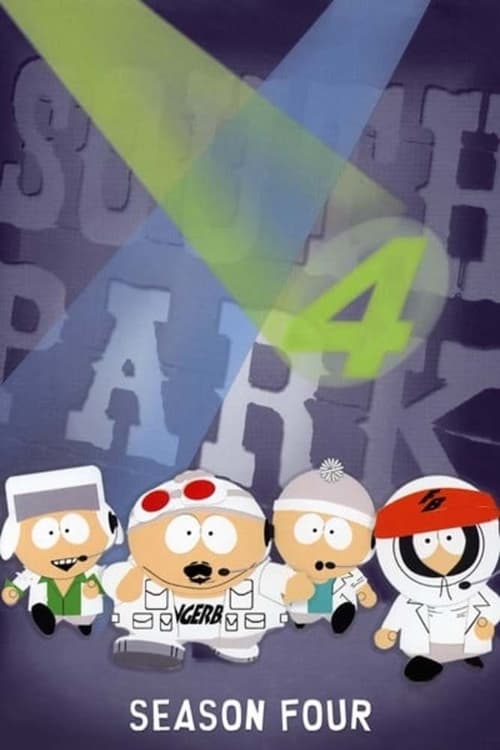
Join Stan, Kyle, Cartman and Kenny as they graduate to 4th grade, join in the 2000 election recount, the controversy over Saddam Hussein, and the introduction of Timmy!!! For them, it’s all part of growing up in South Park!
Season Review
Categorical Breakdown
The narrative of 'Cartman's Silly Hate Crime 2000' directly satirizes hate crime laws and the concept of 'thought crimes,' not an intersectional hierarchy. Diversity is not forced; rather, the disabled character Timmy is introduced for comedic effect while critiquing the media's sensationalism of disability. Characters are primarily judged by their universal character flaws, such as Cartman's greed and cruelty, which remain the central conflict drivers.
The series satirizes aspects of American society, such as the media's exploitation of children or election recounts, but this is a critique of political and media corruption, not an indictment of Western civilization as fundamentally corrupt or racist. The episode 'Chef Goes Nanners' critiques the controversy over a potentially racist town flag by showing the absurdity of both the protest and the town's reaction, not framing the home culture as fundamentally rotten. There is no 'Noble Savage' trope.
Gender roles are largely traditional and satirized through the main characters' parents (Sharon is frantic, Liane is promiscuous, Randy is incompetent), but there is no 'Girl Boss' trope or elevation of female characters as perfect or instantly capable. The narrative is driven by male children. Motherhood is not demonized as a 'prison'; rather, the show's general attack on all adult characters makes parents, regardless of sex, appear inadequate.
The season contains plot lines involving a character coming to terms with his homosexuality (Mr. Garrison) and the depiction of Satan in a non-traditional relationship with Saddam Hussein. This acknowledges alternative sexualities but does not center sexual identity as the most important trait. The focus is on character comedy and parody, not an ideological lecture on gender theory or the deconstruction of the nuclear family. The depiction is for humor, not advocacy.
The show treats God, Jesus, Satan, and religious practice as legitimate objects of direct satire in episodes like 'Do the Handicapped Go to Hell?' The characters' formation of their own church and the depiction of Father Maxi as an easily angered adult show hostility toward organized religion and its hypocrisy. However, the show features a literal God who gives advice and does not conclude that religion is the *root of all evil*; the critique is aimed at the flawed humans and institutions that interpret faith.