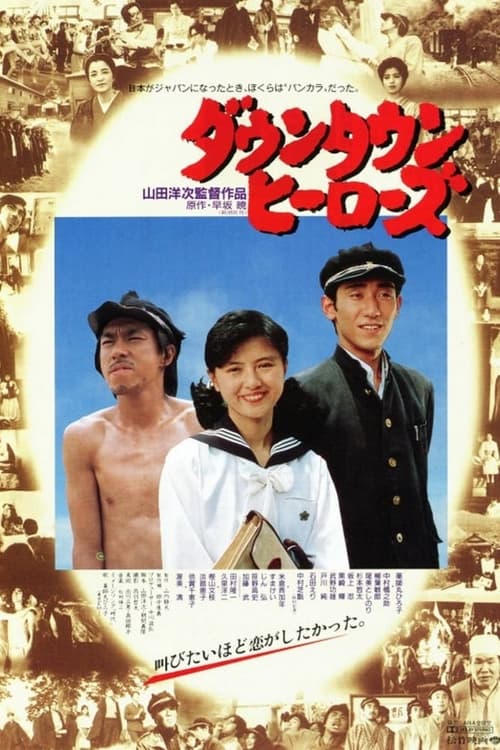
Downtown Heroes
Plot
The adventures and tribulations of a group of students during the years following the II World War.
Get the Weekly Woke Watchlist
New and trending movies scored for woke bias, preachy messaging, and forced political themes — before you waste your evening.
No spam. One useful email per week.
Overall Series Review
Categorical Breakdown
The plot's conflicts arise from post-WWII social change, student dynamics, and class tensions (students vs. yakuza, prep school vs. prostitute), not from a lens of racial or intersectional hierarchy. The story centers on universal themes of youth and friendship. There is no focus on vilifying any ethnic group or enforcing a political view of privilege.
The film is described as openly nostalgic, looking back on the school's old system and the group's final year with fondness. The narrative centers on a defense of a vulnerable person and her safe return to her family, suggesting a positive value placed on community and heritage. The dissolution of the old school system is presented as a wistful ending, not as a celebration of the home culture's fundamental corruption.
The male characters are the central heroes of the action plot, competently and honorably protecting a woman in distress from the yakuza. The female characters are either a romantic interest or a figure needing protection. The structure reinforces traditional, complementary gender roles. There is no evidence of a 'Mary Sue' or anti-natalist message; the resolution involves helping the woman return to her family.
The narrative focuses on a heterosexual, chaste romance between the lead student and the girl borrowed for the play. The main subplot involves a male group protecting a prostitute from a male criminal organization. Sexual themes are traditional and private, without centering alternative sexualities, deconstructing the nuclear family, or introducing contemporary gender theory.
The plot is a humanistic, social drama focused on students and crime in a post-war setting. Religion is not a central theme of conflict or critique. The morality of the boys is based on classic virtues like loyalty and courage, which aligns with objective moral law rather than a worldview of subjective power dynamics.
Get the Weekly Woke Watchlist
New and trending movies scored for woke bias, preachy messaging, and forced political themes — before you waste your evening.
No spam. One useful email per week.