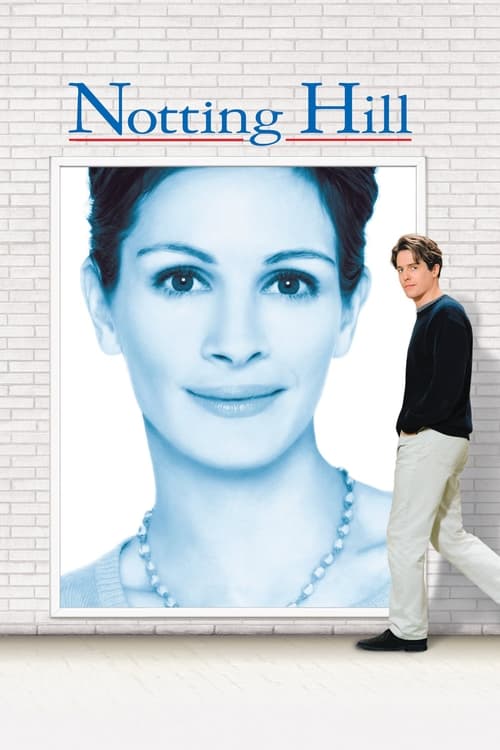
Notting Hill
Plot
London bookstore owner William Thacker's quiet life turns upside down when a chance encounter with famous actress Anna Scott sparks an unlikely romance challenged by their vastly different worlds.
Get the Weekly Woke Watchlist
New and trending movies scored for woke bias, preachy messaging, and forced political themes — before you waste your evening.
No spam. One useful email per week.
Overall Series Review
Categorical Breakdown
The movie's central conflict revolves around class and status, specifically the profound gulf between a famous Hollywood actress and a humble London bookshop owner, not race or immutable characteristics. Character success is attributed to fame or luck, not intersectional hierarchy. There is no vilification of 'whiteness' or forced political lecture about systemic privilege; the narrative simply focuses on an unconventional romance.
The film romanticizes and celebrates the quiet, eccentric charm of the Notting Hill neighborhood and the supportive community of William's British friends and family. This home culture is consistently framed as a moral and spiritual refuge from the chaos, inauthenticity, and intrusion of the outside celebrity world. The movie expresses profound gratitude for its setting and the simple, ordinary life, which aligns with 'Gratitude & Chesterton’s Fence.'
The female lead, Anna Scott, is a powerful, highly successful 'Girl Boss' figure, which elevates her status, but the plot reveals her fame is a source of isolation and unhappiness. Her arc involves seeking a stable, private life rather than continued career ascendancy. The male lead, William, is depicted as bumbling and passive, which is a mild form of emasculation. The ending is pro-natalist, explicitly showing the couple having a child, directly contradicting 'Anti-Natalism' themes.
The primary relationship is a heterosexual male-female pairing, and the entire supporting cast dynamic centers around traditional familial and courtship structures. There is no presence of 'queer theory' ideology, centering of alternative sexualities, or narrative deconstruction of the nuclear family unit; the film culminates in marriage and the start of a family.
The movie does not contain any anti-religious themes or characters. The moral universe operates on a clear, objective truth—that genuine love and humility are superior to the subjective, fleeting, and transactional nature of celebrity culture. Moral relativism is not promoted, and faith is entirely absent from the plot, meaning there is no hostility toward it.
Get the Weekly Woke Watchlist
New and trending movies scored for woke bias, preachy messaging, and forced political themes — before you waste your evening.
No spam. One useful email per week.