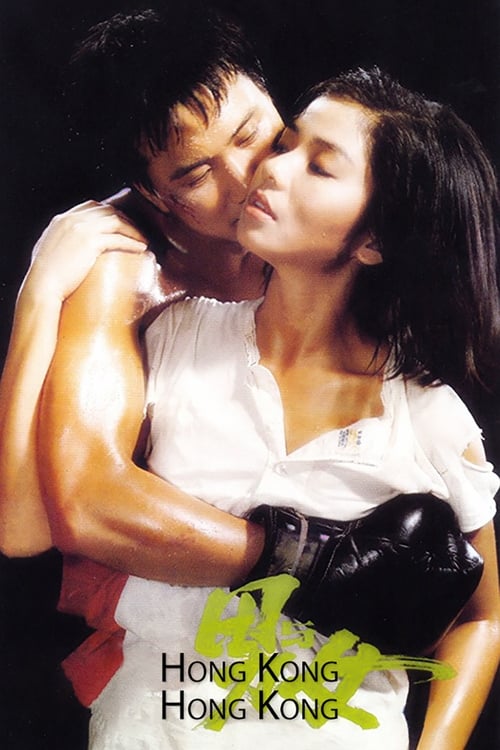
Hong Kong, Hong Kong
Plot
Hong Kong, Hong Kong is the story of a young woman, Man Si Sun, who has arrived illegally in Hong Kong from mainland China, and Kong Yuen Sang, a young man who is a gambler and wannabe boxing champion.
Get the Weekly Woke Watchlist
New and trending movies scored for woke bias, preachy messaging, and forced political themes — before you waste your evening.
No spam. One useful email per week.
Overall Series Review
Categorical Breakdown
The narrative is driven entirely by the systemic oppression of the lead characters due to their immutable characteristics of immigrant status and economic class. The society of Hong Kong is portrayed as having 'systemic oppression' and 'power structures' built so the underclass cannot succeed. The struggle is not a fight for universal meritocracy but a desperate battle against a system rigged by one's status as illegal or impoverished. Characters are defined by their position in the intersectional hierarchy, with the female immigrant facing the worst exploitation.
The film offers a harsh, devastating portrait of Hong Kong's underbelly, contrasting the neat, clean city with the run-down, corrupt shanty towns where immigrants are 'treated like dirt'. It frames the 'home' society and its institutions—specifically the capitalist and immigration systems of the British Colony—as fundamentally corrupt, exploitative, and fundamentally unjust toward its newest inhabitants. The local culture is critiqued as a predatory environment where survival necessitates morally compromised actions.
The female lead's plot is a harrowing examination of exploitation. Man Si Sun is subjected to sexual degradation and sex trafficking, and she is forced to live in constant fear of male migrant workers. Her only path to legal status and survival is a transactional marriage to an older man who wants a son to continue his 'bloodline'. Motherhood and marriage are depicted not as celebrations of vitality or complementary union, but as desperate survival tactics against a predatory, patriarchal system that only offers women exploitation or a loveless arrangement.
The core relationship and central focus is a heterosexual romance, albeit a precarious one, between Man Si Sun and Kong Yuen Sang. The film maintains a normative sexual structure. The narrative does not contain any centering of alternative sexualities, deconstruction of the nuclear family through a queer theory lens, or advocacy for gender ideology. Sexuality is a private matter tied to the desperate survival of the main characters.
The film does not contain any direct hostility or commentary against religion, especially not Christianity. The central conflict is purely socio-economic and moral, rooted in the despair of poverty and systemic exploitation. Characters are forced into immoral, relativistic actions like gambling, prostitution, and transactional marriage for survival, indicating a spiritual vacuum created by economic desperation, but this is a secular critique of society's failure to provide justice, not an attack on faith or objective truth.
Get the Weekly Woke Watchlist
New and trending movies scored for woke bias, preachy messaging, and forced political themes — before you waste your evening.
No spam. One useful email per week.