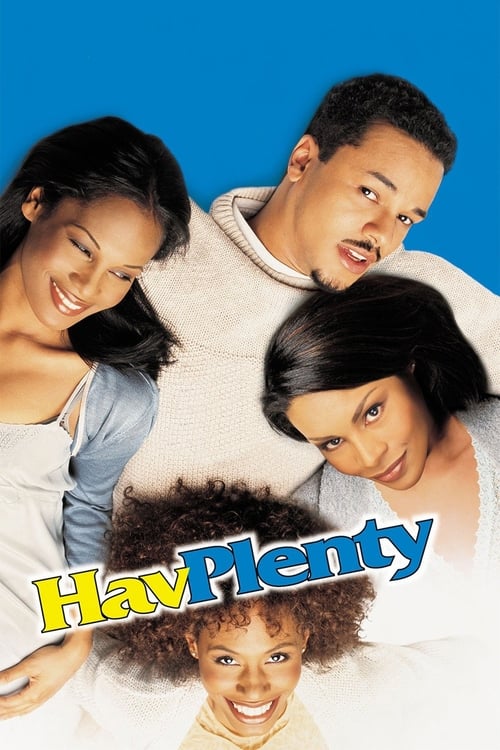
Hav Plenty
Plot
Lee Plenty is an almost broke would-be novelist and Havilland Savage is a rich and very beautiful woman and his friend. When she invites him to her home for New Year's Eve, they start to build up a romance.
Get the Weekly Woke Watchlist
New and trending movies scored for woke bias, preachy messaging, and forced political themes — before you waste your evening.
No spam. One useful email per week.
Overall Series Review
Categorical Breakdown
The narrative's central conflict is entirely based on class disparity (poor artist vs. wealthy socialite) within a cast that is predominantly African American. It is a nuanced look at class distinctions within the community, showing that the Black experience is not a monolith. The movie does not engage in political lecturing on systemic oppression, vilify 'whiteness,' or rely on an intersectional hierarchy for its plot. The characters are judged by their personal merit, ambition, and emotional availability.
The film focuses on an intimate, domestic setting—a wealthy suburban American home—during a holiday weekend. The conflict is internal to the characters and their class differences. No themes appear that suggest a hostility toward Western civilization, American institutions, or one’s own culture or ancestors. The core values of personal ambition and the search for romantic love are viewed as central, not corrupt.
The female lead, Havilland, is successful, wealthy, and professionally established, but she is flawed, being described as 'conceited and controlling' and struggling with her own romantic entanglements, which counters the 'Mary Sue' trope. The male lead, Lee, is passive and empathetic, a deliberate counter-stereotype to the ‘player’ male, and his personality is presented as the very thing that makes him attractive, not a sign of his emasculation. The focus is on a traditional male-female romantic resolution, with no explicit anti-natal or anti-family messaging.
The core plot is a traditional heterosexual romantic comedy revolving around a man's unrequited love for a woman. There are no indications of centering alternative sexualities, deconstructing the nuclear family as an institution, or promoting gender ideology. The structure operates entirely within a normative, traditional male-female romantic pairing.
The movie contains strong language and mature themes typical of a 1990s romantic comedy but does not exhibit overt hostility toward religion. The title itself is a quote from the Bible (Philippians 4:12), which suggests an acknowledgement of a moral or spiritual context, even if the main theme is secular romance. The story focuses on subjective definitions of love and morality within a personal, romantic journey, but does not frame traditional religion as the root of evil or push moral relativism as a political ideology.
Get the Weekly Woke Watchlist
New and trending movies scored for woke bias, preachy messaging, and forced political themes — before you waste your evening.
No spam. One useful email per week.