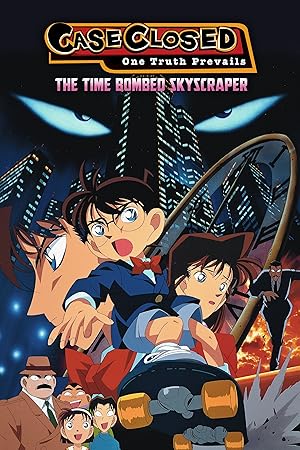
Detective Conan: The Time Bombed Skyscraper
Plot
Detective Shinichi Kudo was once a brilliant teenage detective until he was given a poison that reverted him to a 4 year old. He's taken the name Conan Edogawa so no one (except an eccentric inventor) will know the truth. Now he's got to solve a series of bombings before his loved ones become victims. Who is this madman and why is he doing this. Only the young genius can save the day but will even he be up to the task?
Get the Weekly Woke Watchlist
New and trending movies scored for woke bias, preachy messaging, and forced political themes — before you waste your evening.
No spam. One useful email per week.
Overall Series Review
Categorical Breakdown
Characters are judged solely on their personal merits, primarily their intelligence and moral character. Conan/Shinichi is the brilliant hero, his rival detective Kogoro Mouri is often a bumbling comedic foil, and the villain's motivation is an aesthetic and ego-driven obsession. Race, ethnicity, or intersectional characteristics are never introduced as a factor in competence, moral standing, or plot motivation.
The institutions of justice (the police) are shown to be essential, and the main conflict is stopping a terrorist who threatens the home city. The villain is an architect who self-destructs his own older buildings due to a private obsession with symmetry, which is a critique of his own flawed aesthetic standards, not a condemnation of national or civilizational heritage.
The core relationship between Shinichi and Ran is a traditional male-female pairing, with Ran's ultimate safety linked to her emotional bond with Shinichi. However, Ran is depicted as a physically capable martial artist with agency and courage, even performing the decisive final act of cutting a bomb wire. The most notable male character outside of Conan, Kogoro Mouri, is consistently shown as incompetent and relies on Conan to solve cases, which slightly introduces the bumbling male trope, but it is purely for comedic relief.
The narrative contains no elements of queer theory, alternative sexualities, or gender ideology. The central romantic dynamic is the traditional, private attachment between a male and female character. The structure of family and relationships remains entirely normative.
The film focuses exclusively on a criminal investigation and a race against time. There is no discussion, endorsement, or criticism of religion, faith, or spiritual beliefs. The morality is objective: the bomber's actions are presented as unequivocally evil, and the heroes' goal of saving innocent lives is a clear, transcendent moral good.
Get the Weekly Woke Watchlist
New and trending movies scored for woke bias, preachy messaging, and forced political themes — before you waste your evening.
No spam. One useful email per week.