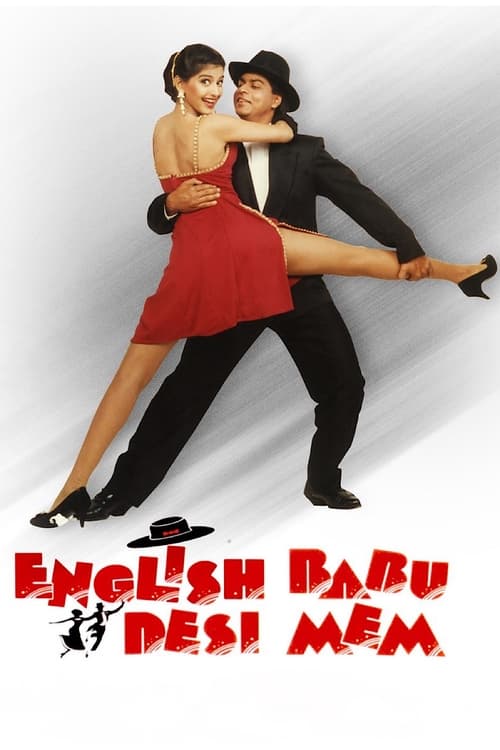
English Babu Desi Mem
Plot
Vikram Mayur is looking after his late brother's eight-year-old son and is torn between choosing to take Nandu back to England to learn his family's business, or risk throwing it all way.
Get the Weekly Woke Watchlist
New and trending movies scored for woke bias, preachy messaging, and forced political themes — before you waste your evening.
No spam. One useful email per week.
Overall Series Review
Categorical Breakdown
The entire plot rests on a clear hierarchy of identity, setting the Westernized, wealthy NRI ('English Babu') against the poor, traditional resident Indian ('Desi Mem'). The narrative establishes the NRI's Westernized identity as the source of his snobbery and moral deficiency, which he must shed to be accepted. Identity and class (rich NRI vs. poor local) are the primary drivers of conflict, displacing universal merit.
The film frames the English/Western lifestyle, as embodied by the Mayur family's five generations in London, as cold, materialistic, and disconnected from genuine family warmth. The Westernized culture of the NRI is explicitly shown as inferior to the indigenous Indian culture, which is portrayed as spiritually and morally superior. The 'English Babu' must reject his Westernized upbringing to find true happiness in India.
The female lead, Bijuriya, is a strong, morally superior woman who is highly independent and self-sacrificing, providing for her nephew alone. The male lead, Vikram, is initially flawed and engages in immoral tactics, including a plot to trick her through a fake romance, which contrasts his character negatively with her virtue. However, her strength is entirely rooted in her protective and maternal devotion to her nephew, which celebrates motherhood and family rather than promoting anti-natalism or career-first 'Girl Boss' tropes.
The narrative adheres strictly to the traditional male-female romantic pairing and nuclear family structure (or its replacement by an aunt's familial duty). There is no centering of alternative sexualities, no deconstruction of the family unit, and no discussion of gender ideology.
The film consistently champions traditional moral virtues like love, family duty, and self-sacrifice over wealth and materialism. The spiritual contrast is between Western materialism and Indian familial warmth, not an attack on religion. The narrative acknowledges objective truth and higher moral law through the female lead's virtuous conduct.
Get the Weekly Woke Watchlist
New and trending movies scored for woke bias, preachy messaging, and forced political themes — before you waste your evening.
No spam. One useful email per week.