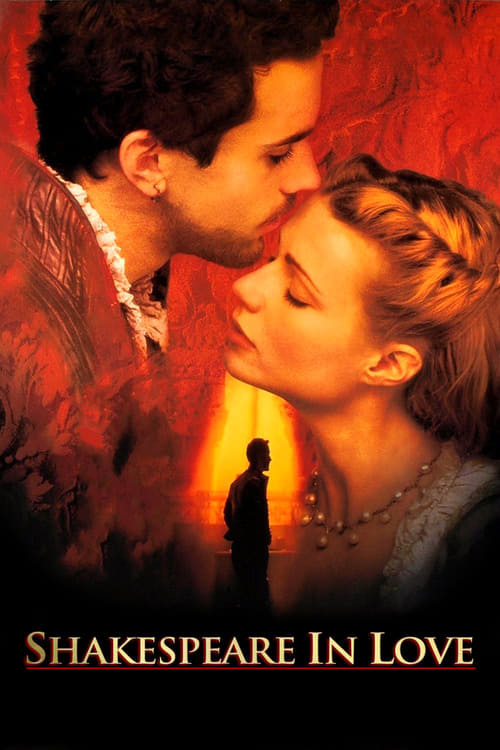
Shakespeare in Love
Plot
Young William Shakespeare is forced to stage his latest comedy, 'Romeo and Ethel, the Pirate's Daughter', before it's even written. When lovely noblewoman Viola de Lesseps auditions for a role, they fall into forbidden love — and Shakespeare's play finds a new life (and title). As their relationship intensifies, the comedy soon transforms into tragedy.
Get the Weekly Woke Watchlist
New and trending movies scored for woke bias, preachy messaging, and forced political themes — before you waste your evening.
No spam. One useful email per week.
Overall Series Review
Categorical Breakdown
The narrative's central tension focuses on universal human themes of creativity and romantic love, rather than race or immutable characteristics. The social conflict rests primarily on class difference and gender-based restrictions, with Shakespeare belonging to a lower class than Viola, who is a noblewoman. Characters are judged by their artistic talent and passion, which aligns with universal meritocracy.
The movie affectionately depicts Elizabethan London and its cultural institutions, particularly the professional theatre world, with energy and humor. While the aristocracy is shown to be venal and obstructive—represented by the odious Lord Wessex—the Western culture of English theater and the crown (Queen Elizabeth I) are ultimately celebrated or validated. The narrative uses the setting as a vibrant backdrop for an artistic and romantic story, not as a fundamentally corrupt or racist civilization.
A woman, Viola de Lesseps, defies the legal and social structure of the time by disguising herself as a man to pursue her desire for an acting career, challenging a man-made system. The institution of arranged marriage, representing the traditional family structure, is framed as an oppressive, hateful obligation that threatens the heroine’s self-fulfillment. A powerful female sovereign, Queen Elizabeth I, explicitly validates Viola's talent and protective masculine energy, making her an ultimate 'Girl Boss' authority figure who upholds the triumph of spirit over law.
The primary mechanism for the plot is the physical act of a woman cross-dressing as a male actor, 'Thomas Kent.' This act temporarily disrupts traditional gender roles and sexual boundaries, as Shakespeare is physically attracted to the persona before discovering it is a woman. The film ultimately uses the cross-dressing to serve a strictly heterosexual romance, and the subsequent inspiration for *Twelfth Night* and the 'Fair Youth' sonnets serves to explain away any actual ambiguity in Shakespeare's own work by resolving it in a normative male-female pairing.
The core conflict is secular, centering on artistic creation, romantic love, class, and social prohibitions. The film does not feature a single Christian character as a villain or bigot, nor does it contain a direct critique or demonization of traditional religion. Moral authority is derived from Queen Elizabeth's secular, absolute judgment and the 'gospel' of passionate, humanistic love and theatre, rather than a confrontation with a higher moral law.
Get the Weekly Woke Watchlist
New and trending movies scored for woke bias, preachy messaging, and forced political themes — before you waste your evening.
No spam. One useful email per week.